

Start here
Why small spaces work for vegetables
Next
Choosing what to grow
Then
Container and raised bed options
Build on it
Soil, watering, and sun basics
When you're ready
Keeping costs low from the start
Why small spaces work for vegetables
A small yard or patio is not a barrier to growing food. Most vegetables are shallow-rooted, fast-maturing plants that respond better to attentive care in a tight space than to neglect across a large plot. A single 4x4-foot raised bed, for example, can produce enough lettuce for a family through most of spring and fall, plus a rotation of summer crops.
Containers and compact raised beds also give you control you do not get in open ground. You choose the soil quality, position the bed or pot to chase sunlight, and move things around as the season changes. Renters benefit too, since containers go with you when you move.
If you are thinking about other ways to get more from a limited budget around the home, the approach here parallels what we cover in stretching a small home improvement budget: prioritize high-return moves and skip what does not add value.
Potting mix
A growing medium sold in bags, formulated for containers. It drains better than garden soil and resists compaction, which helps roots get air and water.
Raised bed
A framed growing area, usually 6 to 12 inches deep, filled with a soil blend. It sits above the existing ground and gives you full control over soil quality.
Compact variety
A plant type bred to stay smaller than standard versions, making it suitable for containers or tight beds. Often labeled 'bush,' 'patio,' or 'dwarf' on seed packets.
Succession planting
Sowing small amounts of the same crop every two to three weeks so you harvest continuously rather than all at once, reducing waste and spreading the harvest over a longer period.
Hardiness zone
A USDA map designation based on average minimum winter temperature that helps gardeners know which plants survive outdoors in their area and when to plant seasonal crops.
Perlite
A lightweight volcanic material mixed into potting soil to improve drainage and prevent compaction. It looks like small white granules and is widely available at garden centers.
Choosing what to grow
Start with crops that give you the most food per square foot and match your household's cooking habits. Lettuce, spinach, kale, and other greens produce quickly (often within 30 to 45 days from seed), tolerate partial shade, and can be harvested repeatedly by cutting outer leaves. They are among the best choices for a first-season garden.
For summer, compact or 'bush' tomato varieties, peppers, and bush beans work well in containers and small beds. Herbs such as basil, parsley, and chives are worth growing even in a single pot: fresh herbs from a nursery or grocery store are expensive relative to what a small plant produces over a season.
Avoid crops that need a lot of horizontal room in year one. Full-size zucchini, sprawling cucumbers, and indeterminate tomatoes can overtake a small setup. Stick to what the seed packet labels 'compact,' 'bush,' or 'patio' until you know how much space you actually have to work with.
For a broader look at how plant choices affect long-term garden costs and time, see annuals vs. perennials and what each costs over time.
Container and raised bed options
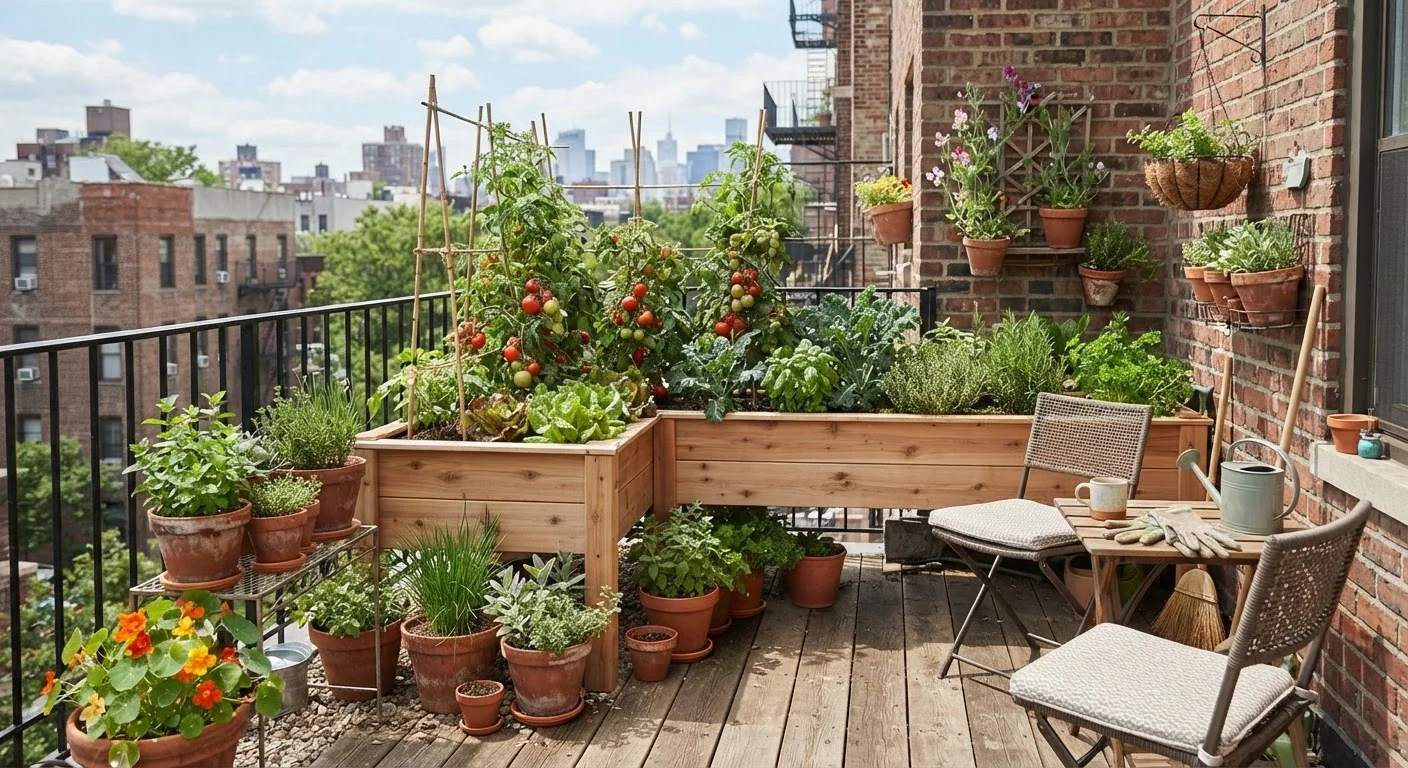
Containers range from plastic nursery pots and fabric grow bags to wooden crates and ceramic planters. What matters most is drainage holes and sufficient depth. Five-gallon containers work for single pepper or compact tomato plants. Lettuce and herbs grow fine in shallower trays or window boxes at least six inches deep.
Raised beds built from untreated cedar or pine boards are a common choice because the wood holds up to outdoor moisture and does not introduce chemicals into the soil. A simple 4x4-foot frame made from 2x8 lumber sits on any level surface and holds enough soil volume to grow through dry stretches without watering twice a day.
Vertical growing adds usable planting area without taking more floor space. A trellis mounted to a fence or wall lets pole beans, peas, and small cucumbers climb rather than sprawl. Wall-mounted pocket planters work for herbs and strawberries. If your patio has a railing, a few rail-mount planter boxes effectively double your growing surface.
Soil, watering, and sun basics
Potting mix is not optional in containers: garden soil compacts, blocks drainage, and often carries weed seeds or pathogens. A quality potting mix holds moisture between waterings while still draining freely. For raised beds, a mix of compost, potting mix, and a coarse amendment such as perlite improves drainage and feeds plants slowly over the season.
Watering consistency matters more than volume. Containers dry out faster than in-ground beds, especially when temperatures climb above 85 degrees Fahrenheit. Check moisture daily in summer by pressing a finger about an inch into the soil. Water when that layer is dry, not on a fixed schedule. Inconsistent moisture causes blossom drop in tomatoes and peppers and bitter flavor in lettuce.
Sun is the hardest variable to control. Fruiting crops (tomatoes, peppers, beans) need at least six hours of direct sun. Leafy greens manage on three to four hours. Before you buy anything, spend a few days watching how sun moves across your patio or yard at different times of day. Position the tallest containers or beds where they will not shade shorter ones.
For ground-level yard areas around your garden, comparing mulch, gravel, and ground cover options can help you manage the space between beds without creating a maintenance headache.
Track your sun before you plant
Take photos of your patio or yard at 9 a.m., noon, and 3 p.m. on a sunny day before buying any plants or containers. This takes less than five minutes and tells you exactly where the best light falls. Moving a container after a plant is established stresses the roots; getting placement right from the start avoids that problem.
Keeping costs low from the start
Seeds cost far less than transplants and give you access to many more varieties. A packet of lettuce seed costs roughly $2 to $4 and contains dozens to hundreds of seeds. Starting indoors four to six weeks before last frost (check your USDA hardiness zone for local timing) extends the growing season without adding cost.
Repurpose containers before buying new ones. Five-gallon buckets, wooden produce boxes, and large food-grade bins all work as planters as long as you drill drainage holes. The main cost to avoid at the start is buying too many large containers before you know what your space and schedule can support.
Compost from a municipal program or a simple backyard bin reduces the cost of soil amendment over time. Many US counties offer free or subsidized compost to residents; check your local waste management website. Collecting rainwater in a barrel, where local regulations allow, lowers watering costs through dry summers.
If you are also exploring low-cost plant options beyond vegetables, indoor plants for families on a budget covers affordable houseplants that work well for households new to plant care.
Frequently Asked Questions
Lettuce, spinach, radishes, bush beans, compact tomatoes, peppers, and most herbs do well in containers. Choose varieties labeled 'patio,' 'bush,' or 'dwarf' for the best results in tight spaces. Avoid large vining crops like sprawling squash or full-size corn unless you have dedicated trellising room.
Most fruiting vegetables such as tomatoes and peppers need at least six hours of direct sun per day. Leafy greens and herbs tolerate partial shade, around three to four hours of sun. A south- or west-facing patio or balcony generally provides the best light for a mix of crops.
Lettuce and herbs grow fine in containers as small as six to eight inches deep. Tomatoes and peppers need at least a five-gallon container, ideally larger. Deeper containers dry out less quickly and give roots room to develop, which directly affects yield.
Regular garden soil compacts in containers, restricts drainage, and can introduce pests and disease. Use a bagged potting mix formulated for containers instead. For raised beds, a blend of potting mix, compost, and coarse material such as perlite or vermiculite drains well and feeds plants over time.
Check moisture by pressing a finger about an inch into the soil. Water when it feels dry at that depth. Containers dry out faster than in-ground beds, especially in summer heat, so daily checks are common. Consistent moisture prevents blossom drop and split fruit in crops like tomatoes.
A basic patio setup with two to three containers, potting mix, and seed packets can cost less than $50 if you source containers creatively. Costs rise with raised bed lumber, trellising, and irrigation. Starting from seed rather than buying transplants is one of the most reliable ways to keep first-year costs down.
The content provided on our blog site traverses numerous categories, offering readers valuable and practical information. Readers can use the editorial team’s research and data to gain more insights into their topics of interest. However, they are requested not to treat the articles as conclusive. The website team cannot be held responsible for differences in data or inaccuracies found across other platforms. Please also note that the site might also miss out on various schemes and offers available that the readers may find more beneficial than the ones we cover.