

Our Verdict
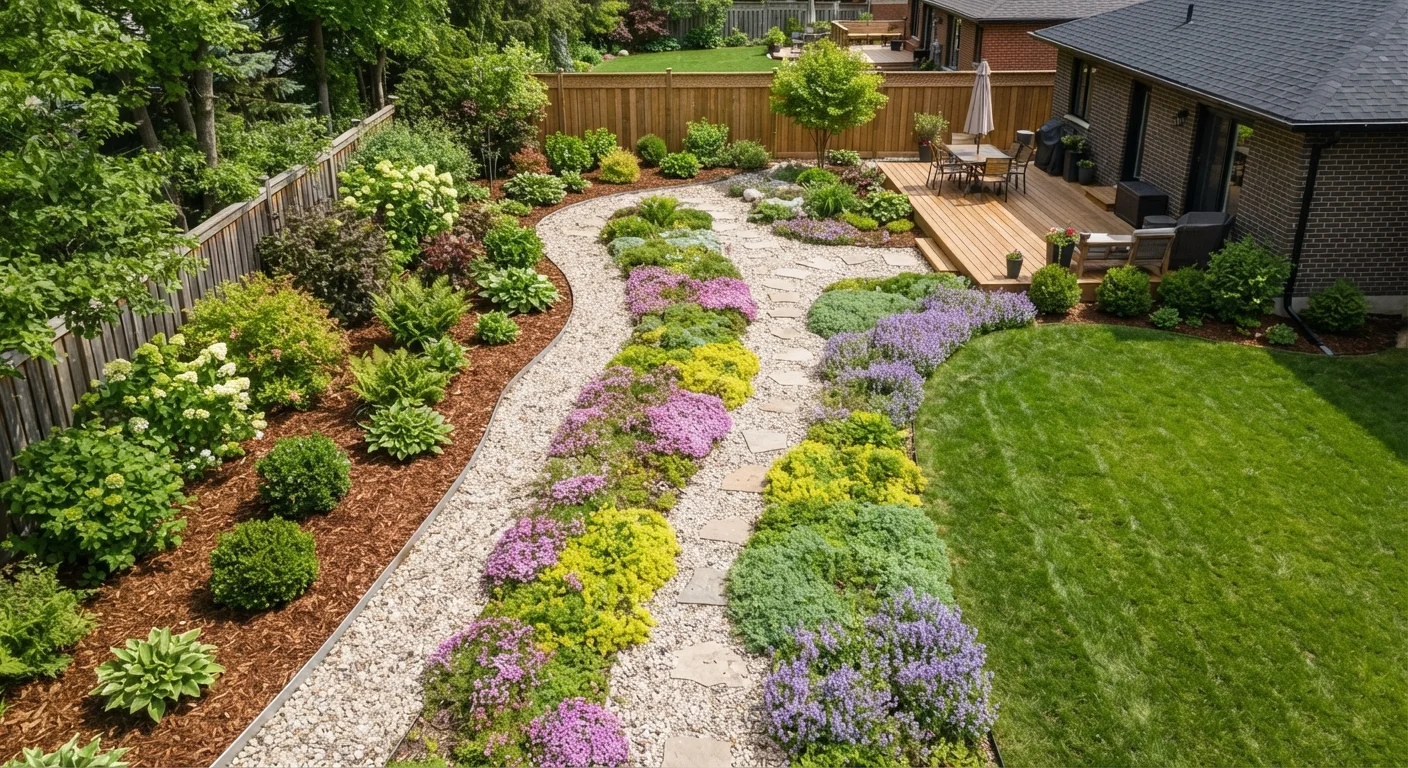
No single option wins for every yard. Mulch is the most flexible and affordable starting point for most households. Gravel works well in dry climates and high-traffic areas where long-term durability matters. Living ground cover delivers the lowest maintenance over time but requires patience and a higher initial investment in labor. Matching the material to the specific zone and climate gives the best return on both money and effort.
| Best for | Recommended |
|---|---|
| Budget-conscious households wanting quick results | Mulch |
| Dry climates or yards with drainage challenges | Gravel |
| Long-term, hands-off maintenance goals | Living ground cover |
| Large yards with varied conditions | A combination approach |
Why your choice of ground cover matters
Bare soil is never neutral. Left uncovered, it loses moisture quickly, invites weeds, and erodes during rain. Choosing a ground cover material is one of the more cost-effective decisions a homeowner can make because it affects watering costs, time spent weeding, and how a yard looks year-round.
The three most common options are organic mulch (wood chips, bark, or straw), inorganic gravel or crushed rock, and living ground cover plants such as creeping thyme, clover, or ajuga. Each has a distinct cost profile, maintenance schedule, and performance range depending on climate.
If you are already thinking about how to stretch a home improvement budget, see our guide to prioritizing home improvement spending for context on where ground cover fits in a broader project list.
Mulch: flexible, affordable, and short-lived
Bagged or bulk wood chip mulch is widely available and typically costs between $3 and $6 per cubic foot bagged, or considerably less when purchased in bulk by the cubic yard. A 2-to-3-inch layer suppresses weeds, retains soil moisture, and moderates soil temperature. Wood mulch also breaks down over time, which adds organic matter to the soil but means it needs topping off every one to two years.
Straw mulch is cheaper per square foot but blows easily and is better suited to vegetable beds than permanent landscape areas. Rubber mulch lasts longer than wood but does not improve soil and carries higher upfront cost.
The main limitation of organic mulch is its short lifespan. In humid climates it can mat, grow mold, or host pests like termites if piled against a house foundation. Keeping mulch several inches away from wood siding or trim reduces that risk.
Keep mulch away from your foundation
Mulch piled against wood siding, trim, or a house foundation traps moisture and can attract termites or cause rot over time. Pull mulch back at least 6 inches from any wood structure. This one habit prevents common and costly damage.
For a yard that includes food production, mulch pairs well with the bed preparation advice in our introduction to vegetable gardening in small spaces.
Gravel: durable but permanent
Crushed rock, pea gravel, and decomposed granite do not decompose, so the upfront cost is often the only significant cost. Prices vary by region and material, but gravel generally runs $1 to $3 per square foot installed over a weed barrier fabric. Without barrier fabric, weeds push through within a season.
Gravel handles heavy foot traffic and drains well, making it a practical surface for paths, side yards, and dry climate landscapes. In wet climates it can become slick, and in hot climates dark stone absorbs heat and raises the temperature around your home's foundation.
The biggest drawback is reversibility. Once gravel is down with fabric beneath it, removing it is a significant labor project. Think of gravel as a near-permanent decision rather than a seasonal adjustment.
| Mulch | Gravel | Living ground cover | |
|---|---|---|---|
| Upfront cost | Low to moderate | Moderate | Moderate to high |
| Long-term cost | Ongoing (annual top-off) | Low after install | Low once established |
| Weed suppression | Good with 2-3 inch layer | Good with fabric barrier | Excellent when mature |
| Moisture retention | Good | Poor | Good |
| Durability | 1-2 years per application | Indefinite | Perennial with care |
| Best climate fit | Humid or temperate | Dry or arid | Varies by species |
| Foot traffic tolerance | Low | High | Varies by species |
| Reversibility | Easy | Difficult | Moderate |
Living ground cover: low effort after establishment
Plants like creeping thyme, clover, ajuga, and sedum spread to fill bare ground, crowd out weeds, and in some cases tolerate light foot traffic. They also support pollinators and give a yard a more natural look than stone or wood chips.
The trade-off is time. Most spreading ground covers take one to three growing seasons to fill in a space. During that period, hand weeding is still necessary. Starter plants or flats cost more upfront than a bag of mulch, though spreading by division over subsequent seasons keeps long-term costs low.
Climate matching matters here more than with the other options. Clover and creeping thyme handle dry, sunny conditions well. Ajuga and pachysandra prefer shade and moisture. Choosing a plant not suited to your conditions means replanting and wasted money. Our comparison of annuals and perennials covers related plant selection thinking that applies to ground cover choices too.
How to decide for your specific yard
A few practical questions help narrow the choice. How much sun and rainfall does the area get? Is the ground flat or sloped? Do children or pets use the space heavily? What is your tolerance for annual maintenance tasks?
Slopes in moderate-rainfall areas often do best with living ground cover or mulch because gravel can shift and wash. High-traffic side yards and paths suit gravel or stepping stones. Shaded areas under trees where grass refuses to grow are good candidates for mulch or shade-tolerant ground cover plants.
Many yards benefit from a zone-by-zone approach: gravel on a dry side path, mulch under shrubs and trees, and low-growing plants in open sunny borders. This splits the budget across materials while putting each one where it performs best.
The content provided on our blog site traverses numerous categories, offering readers valuable and practical information. Readers can use the editorial team’s research and data to gain more insights into their topics of interest. However, they are requested not to treat the articles as conclusive. The website team cannot be held responsible for differences in data or inaccuracies found across other platforms. Please also note that the site might also miss out on various schemes and offers available that the readers may find more beneficial than the ones we cover.