

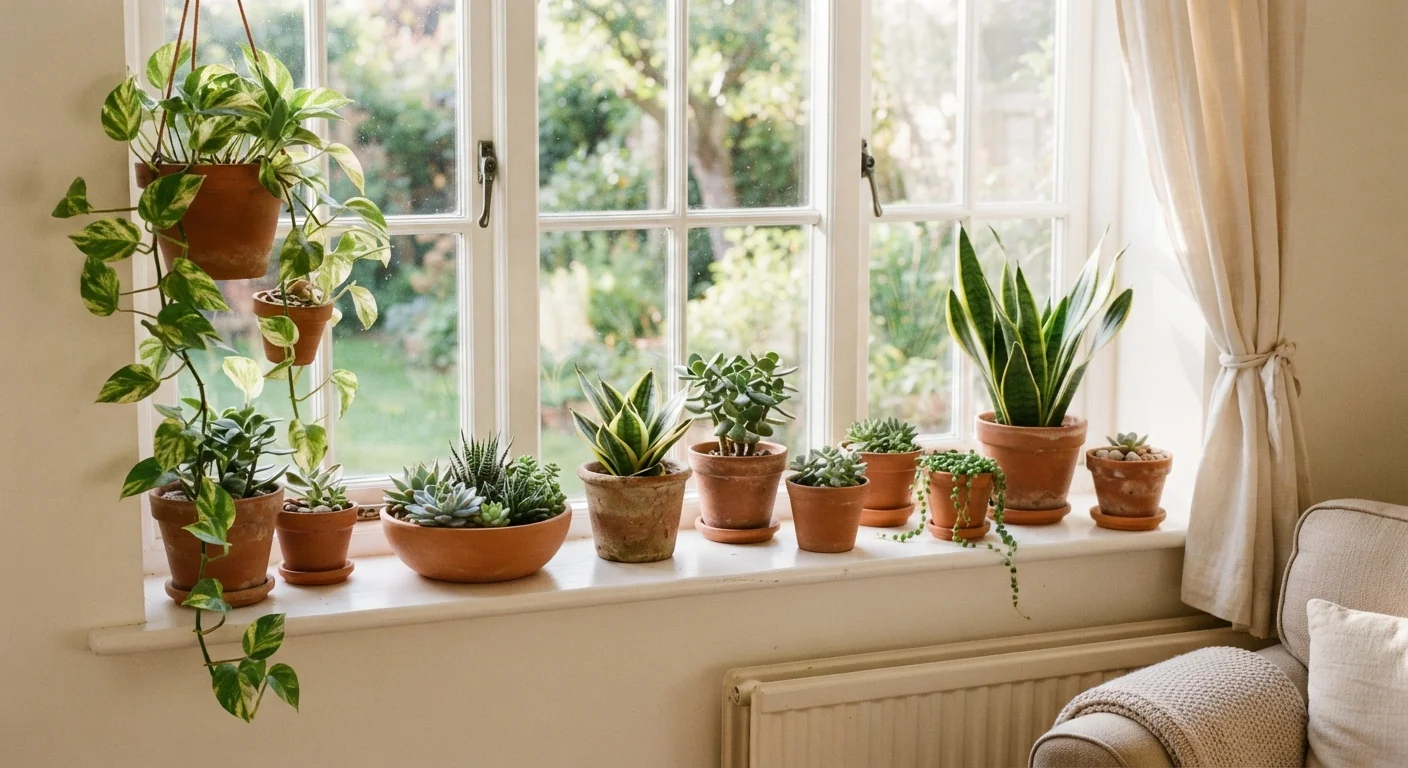
Why houseplants make sense for budget-minded families
A single potted plant can do real work in a room: soften hard lines, add a point of color, and make a space feel lived-in rather than bare. For families watching spending, that return is hard to match for a few dollars and a corner of a windowsill.
The plants listed here were chosen against three criteria: low watering frequency, tolerance for imperfect light, and low purchase cost. Each one can realistically survive in a home where the adults are busy, the kids are active, and nobody is reading soil-moisture charts. For families thinking broadly about low-cost home improvements, our guide to stretching a home improvement budget covers how to prioritize spending across the whole house.
One note before starting: pet toxicity is not universal. Several plants that are easy to grow are also toxic to cats, dogs, or small children who might chew on leaves. The list below flags known hazards, but always cross-check with the ASPCA's online plant toxicity database or your veterinarian before bringing a new plant home.
Pothos (Epipremnum aureum)
Pothos is probably the most forgiving houseplant available. It tolerates low light, inconsistent watering, and average indoor humidity without complaint. Leaves are glossy and trail attractively from shelves or hang from a ceiling hook, which keeps them out of reach of toddlers and pets.
Toxicity note: pothos is toxic to cats and dogs if ingested. Place it high where animals cannot reach it, or choose a different plant if you have a pet that climbs.
Propagation is simple: cut a stem just below a leaf node, place it in water, and roots appear within two to three weeks. A small nursery pot typically costs between two and five dollars.
One pothos cutting in a glass of water roots within two to three weeks, no soil needed.
Snake plant (Dracaena trifasciata)
Snake plants store water in their thick leaves and can go two to three weeks between waterings, making them genuinely hard to kill through neglect. They tolerate low light, though growth slows considerably without some indirect sun. Their upright, architectural shape works in corners and narrow spaces.
Toxicity note: mildly toxic to cats and dogs. Symptoms from ingestion are generally mild but keep plants out of chewing range.
Snake plants also appear on NASA's Clean Air Study list, though the practical air-purification benefit in a typical home is modest rather than dramatic. The main value is durability and appearance, not air filtration.
Snake plants can go two to three weeks between waterings and tolerate low-light corners.
Spider plant (Chlorophytum comosum)
Spider plants produce long arching leaves with pale stripes and send out runners tipped with small plantlets, called spiderettes, that can be rooted to create new plants at no cost. They prefer indirect light and tolerate irregular watering once established.
Spider plants are non-toxic to cats, dogs, and humans, which makes them one of the few genuinely pet-safe options on this list. For households with curious animals or young children who put things in their mouths, that safety profile is a meaningful advantage.
A small starter plant is inexpensive, and within a single growing season it will produce several spiderettes ready for propagation.
Spider plants are non-toxic to cats and dogs, a rare combination with low maintenance needs.
ZZ plant (Zamioculcas zamiifolia)
The ZZ plant stores water in thick rhizomes underground, which means it can handle weeks without watering and low-light conditions that would kill most other plants. It grows slowly and stays compact, so it fits on a desk, shelf, or side table for years without outgrowing its pot.
Toxicity note: all parts of the ZZ plant are toxic if ingested and can cause skin irritation on contact. This plant is best placed out of reach of children and pets.
Growth is slow, so buying a slightly larger specimen up front can be worth the extra few dollars if you want immediate visual impact.
ZZ plants survive weeks without water by storing moisture in underground rhizomes.
Peace lily (Spathiphyllum)
Peace lilies bloom indoors without direct sunlight, producing white flowers that last several weeks at a time. They prefer low to medium indirect light and signal clearly when they need water by drooping slightly, then recovering within hours of being watered. This visible feedback loop makes them useful for people still learning a watering routine.
Toxicity note: peace lilies are toxic to cats, dogs, and young children. Despite their gentle appearance, ingestion causes mouth irritation and other symptoms. Place them on high shelves or in rooms where pets and small children do not have regular access.
Peace lilies droop visibly when they need water, then recover within hours of being watered.
Aloe vera
Aloe is a succulent that needs very little water and thrives in a bright window with direct or indirect sun. It grows slowly and stays compact for years in a small pot. Beyond its appearance, the gel inside the leaves has a long history of household use for minor skin irritation, though the FDA has not evaluated these uses as formal medical treatments. Consult a pharmacist or doctor before using plant-derived gel on serious burns or wounds.
Toxicity note: aloe gel applied to skin is generally well-tolerated, but ingesting aloe can cause digestive upset in both people and pets. Keep out of reach of cats and dogs.
Aloe needs very little water and does well in a sunny window with minimal attention.
Building a practical indoor plant routine
The most common reason houseplants die in family homes is overwatering, not neglect. Most of the plants here prefer to dry out between waterings. A simple rule: push a finger an inch into the soil, and water only when it comes out dry. That test takes five seconds and prevents most root rot.
Propagation is the best long-term cost strategy. Pothos, spider plants, and snake plants all produce offshoots or cuttings that root in a glass of water within a few weeks. One purchased plant can supply cuttings for every room in the house, or become a no-cost gift for neighbors and relatives.
Getting started without overspending
Garden centers and nurseries often sell small starter plants for two to six dollars each. Hardware stores and grocery chains sometimes carry the same varieties at similar prices. Buying one plant, learning its watering rhythm for a month, and then propagating or buying a second is a lower-risk approach than purchasing ten plants at once and managing them all simultaneously.
If your household is also thinking about outdoor growing, the calculus around plant choice shifts considerably. Our comparison of annuals and perennials walks through real cost and time differences for yard plants, and starting a vegetable garden in a small space covers container food growing from scratch.
The content provided on our blog site traverses numerous categories, offering readers valuable and practical information. Readers can use the editorial team’s research and data to gain more insights into their topics of interest. However, they are requested not to treat the articles as conclusive. The website team cannot be held responsible for differences in data or inaccuracies found across other platforms. Please also note that the site might also miss out on various schemes and offers available that the readers may find more beneficial than the ones we cover.