

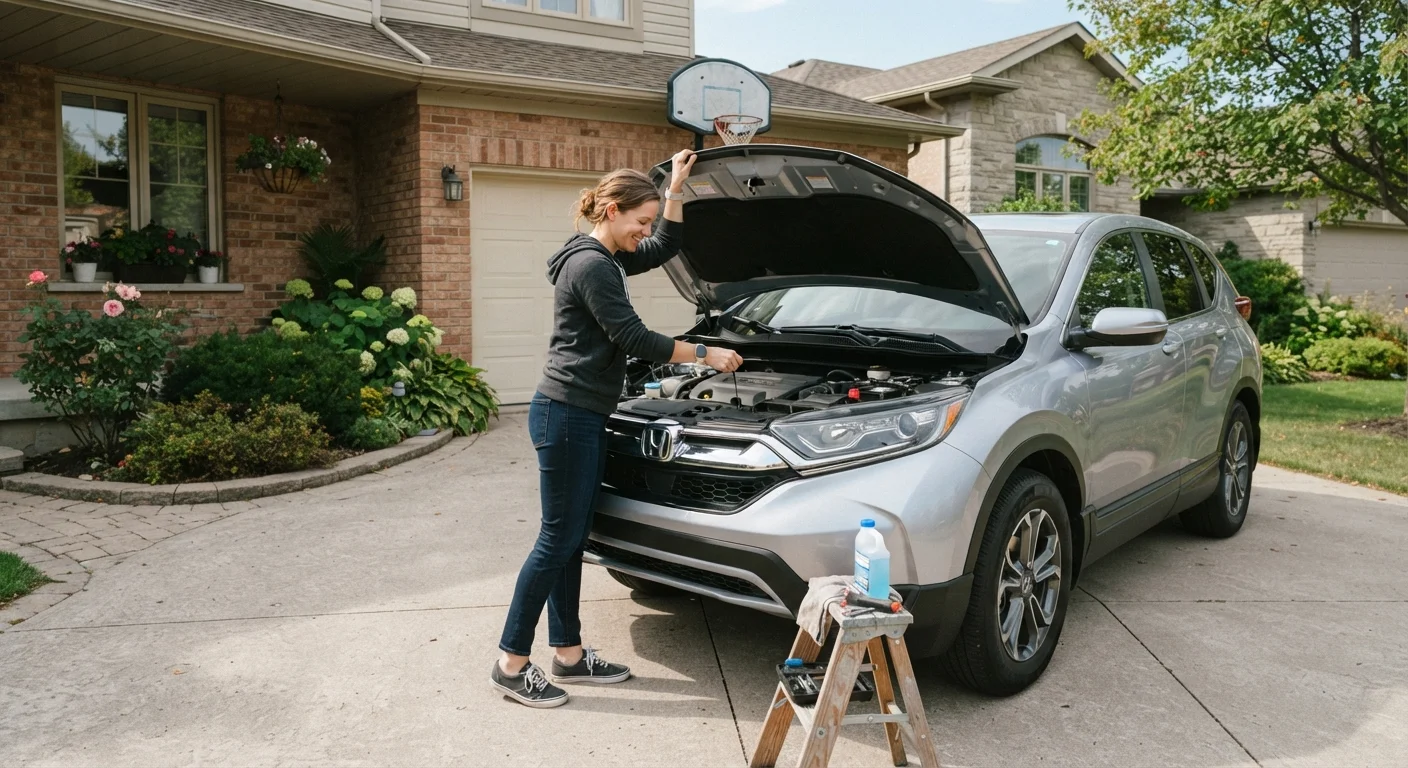
Our Verdict
DIY maintenance makes sense for straightforward, low-risk tasks where mistakes are recoverable and the savings are real. For anything touching brakes, fuel, airbags, or structural components, a licensed mechanic brings the training, tools, and accountability that protect your family on the road.
| Best for | Recommended |
|---|---|
| Owners comfortable with tools who want to cut routine upkeep costs | DIY maintenance |
| Safety-critical systems such as brakes, suspension, and airbags | Professional service |
| High-mileage vehicles where hidden problems are more likely | Professional service |
| Simple fluid checks and filter swaps on a modern vehicle | DIY maintenance |
Why the DIY versus pro question matters for family budgets
Labor typically accounts for half or more of a typical repair bill. For a family running one vehicle on a tight budget, that gap adds up fast. At the same time, a car is a safety-critical machine, and an improperly completed job can put passengers at risk or create legal exposure if an accident follows. The goal is not to do everything yourself; it is to know exactly where the line sits.
Your owner's manual is the starting point for any maintenance decision. It lists service intervals, fluid specifications, and torque values specific to your vehicle. Ignore it and you risk voiding a powertrain warranty or using the wrong parts. See our guide to early warning signs for help recognizing when a problem has already moved past the maintenance stage.
Maintenance tasks that are safe to do yourself
The following jobs share a common trait: a mistake is either obvious before you drive away or unlikely to cause immediate harm. They require modest tools, no specialized licenses, and no handling of hazardous high-pressure or high-voltage systems.
Engine air filter replacement
On most vehicles, the air filter sits in a plastic housing under the hood secured by clips or a few screws. Swapping it takes under ten minutes. A clogged filter reduces fuel economy and engine performance, so this is one of the higher-value DIY tasks. Check your owner's manual for the correct filter specification.
Cabin air filter replacement
The cabin filter cleans air flowing to passengers. It is usually behind the glove box or under the dashboard. No tools are needed on many models. Replacement filters are inexpensive, and the job is straightforward enough for a first-time DIYer.
Wiper blade replacement
Blade sets come with instructions, and most automakers provide how-to videos for specific models. Poor wipers are a genuine safety issue in rain, so replacing them yourself at the first sign of streaking is a sensible habit.
Checking and topping off fluids
Engine oil, coolant (when the engine is cold), windshield washer fluid, and power steering fluid all have clearly marked reservoirs with min/max indicators. Checking levels monthly costs nothing and can prevent expensive damage. Topping off washer fluid is zero-risk; adding coolant or oil requires using the exact type your manual specifies.
Battery terminal cleaning
Corrosion on battery terminals causes starting problems. Disconnecting the battery (negative cable first), cleaning the terminals with a wire brush, and reconnecting is within reach for most owners. Wear eye protection and gloves, since battery acid residue is caustic. If the battery itself is more than four years old and struggling, have a shop test it before you assume cleaning solved the problem.
Keep a simple maintenance log
A notebook or free smartphone app recording the date, mileage, and task completed for every service interval is one of the most practical habits a car owner can build. It helps you stay on schedule, demonstrates care to future buyers if you sell, and gives a mechanic useful context when diagnosing problems. Many owners overlook this until a warranty question or a diagnostic puzzle makes them wish they had started earlier.
Jobs that belong to a licensed mechanic
These tasks involve safety-critical systems, hazardous materials, or precision that requires professional tools and training. Getting them wrong does not just mean a repeat trip to the shop; it can mean brake failure, a fuel fire, or an airbag that deploys unexpectedly during a repair.
Brake system work
Brake pads and rotors wear at predictable rates, and many owners ask whether swapping pads is a DIY job. The procedure itself is not complicated, but the consequences of an error are severe. Improperly seated calipers, contaminated rotors, or incorrectly torqued hardware can cause brake fade or failure at highway speeds. Unless you have documented experience with brake systems, this is one to leave with a professional who carries liability for the work.
Timing belt or chain service
On interference engines (where the pistons and valves occupy overlapping space), a timing belt that breaks or is installed out of phase destroys the engine. The replacement procedure requires precise alignment and often involves removing significant portions of the front of the engine. The stakes and the skill requirement are both high.
Airbag and supplemental restraint system work
Airbag components store electrical charges that can trigger deployment even with the battery disconnected. Federal regulations govern airbag repair and replacement. This is non-negotiable professional territory.
Fuel system repairs
Fuel is flammable, and fuel system components are under pressure. Leaks can cause fires. Any work beyond replacing an externally accessible fuel filter should be handled by a qualified mechanic.
For owners of older vehicles, maintaining a high-mileage family car often means more frequent inspection of these systems, where professional eyes catch problems before they escalate.
| DIY maintenance | Professional service | |
|---|---|---|
| Typical cost | Parts cost only | Parts plus labor |
| Skill required | Basic mechanical aptitude | Trade training and certification |
| Tools needed | Basic hand tools | Specialized and diagnostic equipment |
| Safety risk if done wrong | Low (for eligible tasks) | Mitigated by professional liability |
| Warranty implications | Possible impact if done incorrectly | None when using certified shop |
| Best suited for | Filters, fluids, wipers, battery terminals | Brakes, timing, airbags, fuel system |
Making the call: a practical framework
Before starting any maintenance job, ask four questions. Can a mistake injure me or a passenger? Does the job involve fuel, high voltage, or a pressurized system? Does my vehicle's warranty require dealer or certified service? Do I have the specific tools the job actually requires, not just generic ones?
If any answer is yes, the job likely belongs to a professional. The same logic applies to home projects, as our overview of DIY home repairs for beginners explains: the savings are only real when the work is done correctly and safely.
When you do hire a mechanic, get a written estimate before any work begins, ask for worn parts back so you can see what was replaced, and verify that the shop carries proper insurance. These habits protect you regardless of the repair involved.
This article is for general informational purposes only and does not constitute professional mechanical, legal, or safety advice. Always consult a licensed mechanic for diagnosis and repair of your specific vehicle, and verify local regulations regarding vehicle maintenance and inspection requirements.
The content provided on our blog site traverses numerous categories, offering readers valuable and practical information. Readers can use the editorial team’s research and data to gain more insights into their topics of interest. However, they are requested not to treat the articles as conclusive. The website team cannot be held responsible for differences in data or inaccuracies found across other platforms. Please also note that the site might also miss out on various schemes and offers available that the readers may find more beneficial than the ones we cover.