

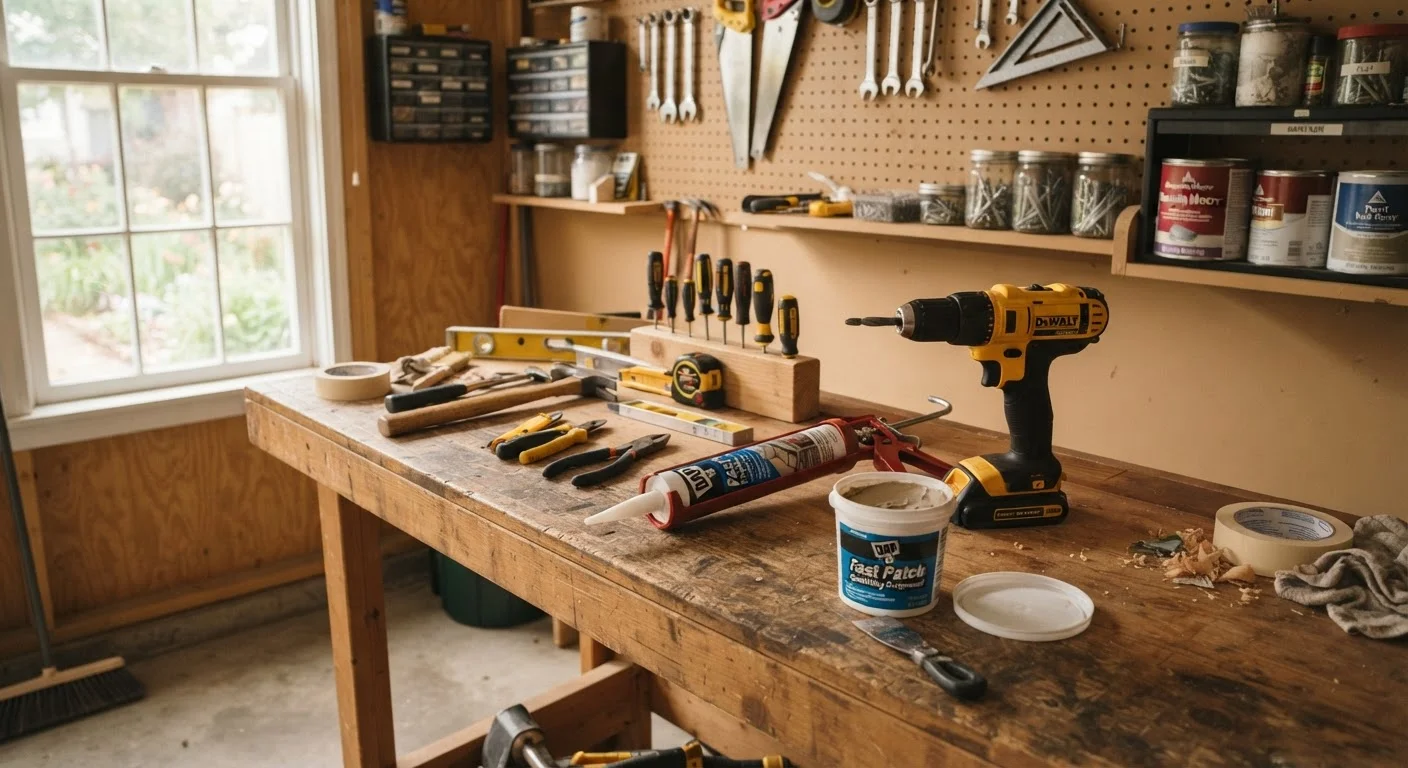
What makes a repair beginner-appropriate
Not every home repair calls for a contractor. Many common fixes are safe for a careful homeowner with basic tools, some patience, and a willingness to follow instructions. The line between a DIY job and a professional one comes down to three factors: the risk of injury, the risk of making things structurally or systemically worse, and whether local codes require a licensed trade.
A repair is generally safe for a beginner when it involves no live electrical circuits, no load-bearing structure, no gas lines, and no work that would require a permit in most jurisdictions. Cosmetic fixes, minor maintenance, and simple replacements fall comfortably into that category.
| Permit typically required | Electrical, plumbing, structural, and HVAC work in most US jurisdictions |
| Tools for safe electrical testing | Non-contact voltage tester (available at most hardware stores for under $20) |
| Most common DIY plumbing fix | Replacing a toilet flapper, typically a 15-minute repair requiring no special tools |
| Caulk lifespan | Silicone caulk in wet areas typically lasts 5 to 10 years before needing replacement |
| When to call a structural engineer | Any time a wall removal, foundation crack, or sagging floor is involved |
If you want a broader picture of what home repairs cost over time, the hidden costs of homeownership article covers maintenance reserves and what families should budget beyond their mortgage.
Repairs most homeowners can handle
The following tasks are within reach for a careful beginner. Each one carries relatively low risk of injury or serious damage when done with the right materials and reasonable attention to detail.
Patching drywall
Small holes from nails, screws, or minor impacts can be filled with a pre-mixed spackling compound. Larger holes up to about six inches across can be patched with a mesh patch kit and joint compound. Sand smooth, prime, and paint. The risk is mostly cosmetic: a poor patch looks bad but causes no safety problem.
Caulking around windows, tubs, and sinks
Old or cracked caulk lets moisture in and drives up energy bills. Removing the old bead with a utility knife and applying a fresh line of silicone or latex caulk is straightforward. Use the correct caulk type for the surface: silicone for wet areas, paintable latex for trim.
Replacing faucet washers and supply lines
A dripping faucet wastes water and adds to utility bills. Shutting off the supply valve under the sink, disassembling the handle, and swapping a worn washer or O-ring is a low-stakes repair. Keep a towel and a bucket nearby. If the valve under the sink will not close fully, call a plumber before proceeding.
Fixing a running toilet
The fill valve, flapper, and float are all inside the tank and carry no risk beyond a wet floor if something goes wrong. Replacement parts are inexpensive and most come with clear instructions.
Installing weatherstripping and door sweeps
Gaps at doors and windows let in drafts and insects. Adhesive-backed foam or V-strip weatherstripping and stick-on door sweeps require no special tools and reduce heating and cooling costs noticeably. This is one of the most cost-effective maintenance tasks a homeowner can do. See stretching a small home improvement budget for other high-return, low-cost upgrades.
Painting interior walls
Prep work (cleaning, patching, priming) matters more than the paint itself. Use painter's tape, drop cloths, and the correct roller nap for your wall texture. Ventilate the room well.
Repairs that need a licensed professional
Some jobs look manageable from the outside but carry real hazards. Attempting them without training, proper tools, or permits can result in injury, structural damage, voided home insurance, or failed inspections when you sell.
Electrical panel work and new circuit wiring
Work at the panel, running new circuits, or upgrading service is dangerous and requires a licensed electrician in virtually every US jurisdiction. Arc faults and improper grounding cause fires; there is no margin for error.
Gas line repairs or appliance connections
Gas leaks cause fires and explosions. Any work on gas supply lines, including moving a gas dryer connection or capping a line, must be done by a licensed plumber or gas fitter.
Load-bearing wall removal
If a wall carries structural load, removing it without a temporary support system and proper beam sizing can cause a partial collapse. A structural engineer or licensed contractor must assess the work first.
Roof repairs beyond surface-level patching
Anything involving flashing, decking, structural rafters, or a full re-roof should go to a licensed roofer. Falls from roofs are a leading cause of home-repair fatalities.
Major plumbing into the main stack
Adding or rerouting drain lines that connect to the main waste stack typically requires a permit and a licensed plumber. Incorrect venting causes slow drains, sewer gas intrusion, and failed inspections.
Before you start any repair
Check whether your municipality requires a permit. Permits exist for inspections that protect you, and unpermitted work can complicate a home sale or an insurance claim. Your local building department website usually lists what requires a permit.
Turn off the relevant utility before starting. Water at the shutoff valve, electricity at the breaker (and verify it with a non-contact voltage tester before touching any wire). If you are uncertain which breaker controls a circuit, test before assuming.
Gather the right materials before you begin. Stopping mid-job to make a hardware store run while a pipe is disconnected or a wall is open adds risk. When in doubt about scope, get a professional assessment first; the estimate is usually free.
The same principle applies to vehicle maintenance: knowing the boundary between what you can safely handle and what needs a trained technician saves money and prevents larger problems.
The content provided on our blog site traverses numerous categories, offering readers valuable and practical information. Readers can use the editorial team’s research and data to gain more insights into their topics of interest. However, they are requested not to treat the articles as conclusive. The website team cannot be held responsible for differences in data or inaccuracies found across other platforms. Please also note that the site might also miss out on various schemes and offers available that the readers may find more beneficial than the ones we cover.