

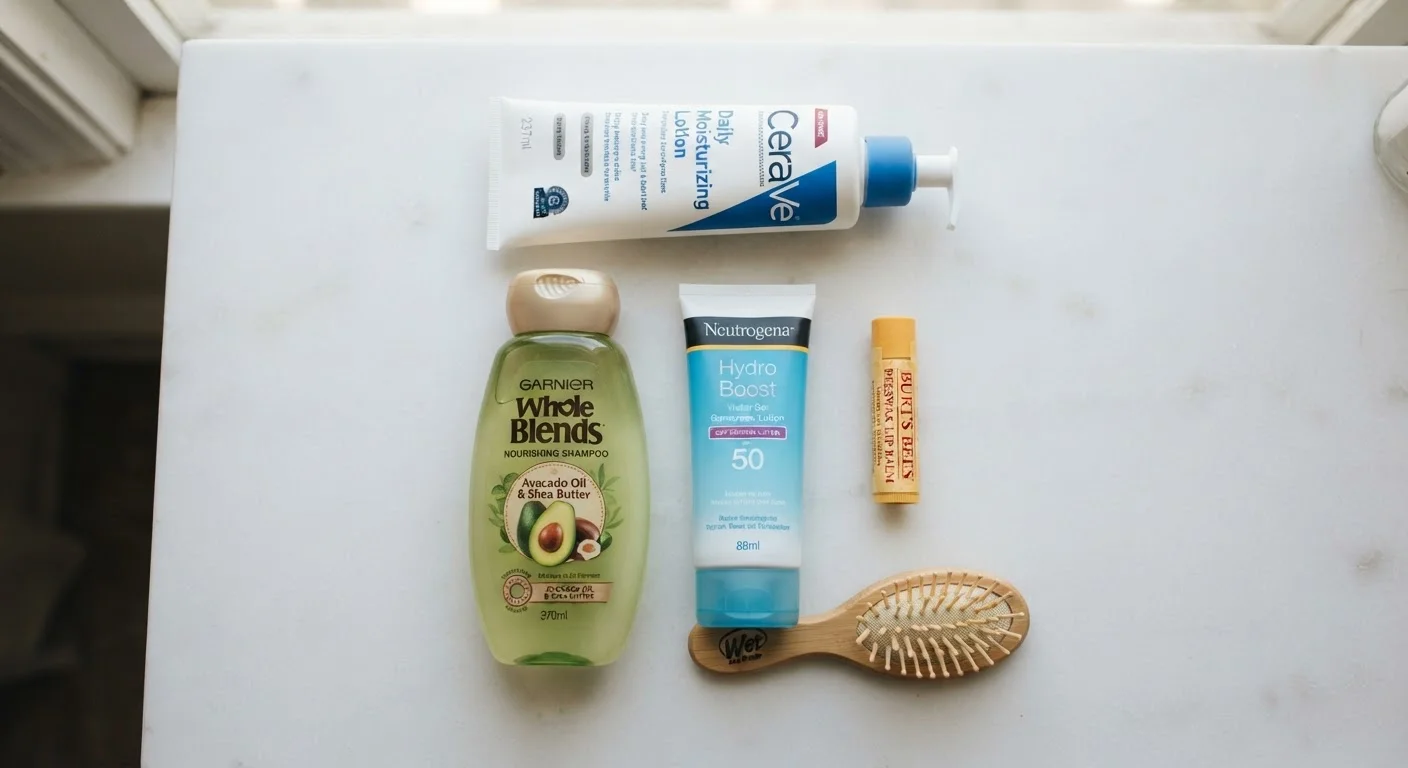
Why beauty spending deserves a budget category
Beauty purchases tend to land in a financial gray zone. They feel too small to track individually, yet they add up to a noticeable sum over a month. The American Personal Care Products Council has reported that the average American household spends several hundred dollars annually on personal care, and that figure climbs when you account for every family member. If those purchases are not planned, they are effectively invisible spending, which is the same pattern that drives subscription creep in other parts of a household budget.
Giving beauty its own line in your budget does two things. It prevents overspending by making costs concrete before you get to the checkout. It also gives you permission to spend, because money set aside intentionally feels less like guilt and more like a plan. This guide breaks the category into four areas, skincare, hair care, makeup, and wellness, so you can evaluate each one separately and decide where your family's money does the most work.
Skincare: what you actually need versus what is optional
Most dermatologists describe a functional routine as three steps: a gentle cleanser, a moisturizer suited to your skin type, and a broad-spectrum SPF product for daytime. Everything else, serums, toners, eye creams, essences, is optional and should be added only if a specific concern warrants it. Starting with the core three keeps costs low and makes it easier to identify what is actually helping your skin. For a practical starting point, see our morning skincare routine guide for a full walkthrough using widely available products.
One of the most common budget leaks in skincare is buying products faster than you finish them. A half-used bottle of cleanser sitting next to a new one is money sitting on a shelf. Using products in sequence, finishing one before opening the next, stretches your spending without changing your routine at all.
Patch-test any new skincare product on a small area of skin before applying it to your full face. This prevents a reaction from wasting the whole product and, more importantly, protects your skin.
Even gentle formulas can cause irritation for some skin types, and discovering that on your entire face means starting over with a new product, which costs more money and time.
Check the ingredient list rather than the product name when comparing cleansers across price points. Two products with the same key active ingredient often perform similarly regardless of packaging.
Ingredient transparency is required on all cosmetics sold in the US, meaning the information needed to compare products is always available on the label without any guesswork.
Ingredient knowledge also matters here. Drugstore cleansers with gentle surfactants like glucoside or betaine are just as effective for everyday cleansing as pricier alternatives. Understanding what ingredients do, rather than what a label says, is the subject of our skincare myths article, which addresses several beliefs that lead people to overspend. For those who are brand new to routines entirely, the beginner's skincare guide covers exactly where to start without the overwhelm.
Hair care: managing costs for the whole family
Hair care is where family beauty budgets get complicated fast. A single adult might spend a manageable amount, but multiply that across two adults and two or three children with different hair types and textures, and the number climbs quickly. The biggest controllable costs are professional services and product volume.
For salon visits, spacing appointments and learning a few maintenance skills at home, such as trimming split ends between cuts or applying a deep conditioner yourself, can reduce frequency without a noticeable change in results. On the product side, a shampoo and conditioner that work well for most household members reduces the number of bottles in rotation. Children generally need simpler formulations than adults, so a gentle, fragrance-free shampoo often works across age groups.
Correct product application also affects cost. Using more shampoo than hair actually needs does not improve cleansing; it wastes product. A quarter-size amount is sufficient for most hair lengths. The same logic applies to conditioner: concentrating it on the mid-lengths and ends where moisture is most needed uses less while still conditioning effectively. For families managing multiple hair types, understanding how layering and application order affect results can reduce the need for extra products. Our layering guide applies the same logic to skincare, but the underlying principle, apply in the right order for best absorption, transfers to hair care products as well.
Makeup: a minimal approach that still gets results
Makeup is the most discretionary category in any beauty budget, which makes it the easiest place to cut without affecting skin health or hair condition. That said, for many people, a small routine carries real value for confidence and self-presentation at work or in social settings. The goal is not to eliminate makeup spending but to make it intentional.
A few multi-use products cover most situations: a tinted moisturizer with SPF, a mascara, a lip and cheek product that serves both purposes, and a setting powder if needed. This approach reduces the total number of items in rotation and means each product gets finished before it expires. Makeup products, particularly mascaras and liquid formulas, have expiration dates that matter for hygiene, and unused product that goes past its date is money wasted.
Expired makeup is not just wasteful, it is a hygiene risk
Liquid and cream makeup products can harbor bacteria after their period-after-opening date, which is marked on the packaging with a jar symbol and a number such as '6M' or '12M'. Using expired mascara in particular has been linked to eye infections. Check dates on products you have had for a while before continuing to use them.
Buying makeup in smaller quantities more often, rather than stocking up, tends to keep costs lower overall because it reduces the chance of products expiring unused. The same discipline that helps with grocery spending applies: buy what you will actually use in the near term.
Wellness basics: where beauty and health overlap
Several wellness habits affect how skin and hair look without requiring any product purchase at all. Adequate water intake, consistent sleep, and a diet with enough protein and healthy fats influence skin texture and hair strength in ways that no topical product can fully replicate. These are not beauty tips disguised as health advice; they are the foundation that products are meant to support, not replace.
Sunscreen sits at the intersection of beauty and health spending. Daily SPF use is the single most documented preventive measure for skin aging and skin cancer risk reduction, according to the American Academy of Dermatology. It is also one of the most affordable steps in a routine when kept to a straightforward broad-spectrum formula. For families evaluating where to allocate beauty dollars, SPF is the one area where consistent spending is genuinely justified across all age groups.
Lip balm, hand cream, and a basic body lotion round out the wellness-adjacent category. These are inexpensive individually, but buying multiples of each to leave in different locations, purse, bathroom, car, can quietly multiply costs. Keeping one of each and refilling intentionally is a small habit that keeps this category in check, similar to the spending discipline described in our year-end financial checklist for other household categories.
Putting it all together: a monthly beauty budget framework
A practical family beauty budget works by category rather than by product. Start by listing what each person actually uses regularly, then assign a monthly amount to each category based on current spending. The goal in the first month is not to cut immediately but to see the real number clearly. Many families find their actual beauty spending differs significantly from what they estimated.
Once you have a baseline, the category breakdown makes it easier to decide where adjustments make sense. Skincare tends to be the most consistent spend since products are used daily. Hair care fluctuates with salon timing. Makeup can often be reduced without any impact on daily life for many household members. Wellness items are steady and low-cost when kept simple.
If beauty spending is part of a broader effort to manage household finances, the same principles that apply to grocery habits or home improvement budgeting apply here: identify what is necessary, use what you buy, and adjust the plan when real spending diverges from the target. Beauty does not have to be the category that gets eliminated when money is tight. With a clear breakdown, it can be a well-managed line that serves the whole family without stress.
The content provided on our blog site traverses numerous categories, offering readers valuable and practical information. Readers can use the editorial team’s research and data to gain more insights into their topics of interest. However, they are requested not to treat the articles as conclusive. The website team cannot be held responsible for differences in data or inaccuracies found across other platforms. Please also note that the site might also miss out on various schemes and offers available that the readers may find more beneficial than the ones we cover.