

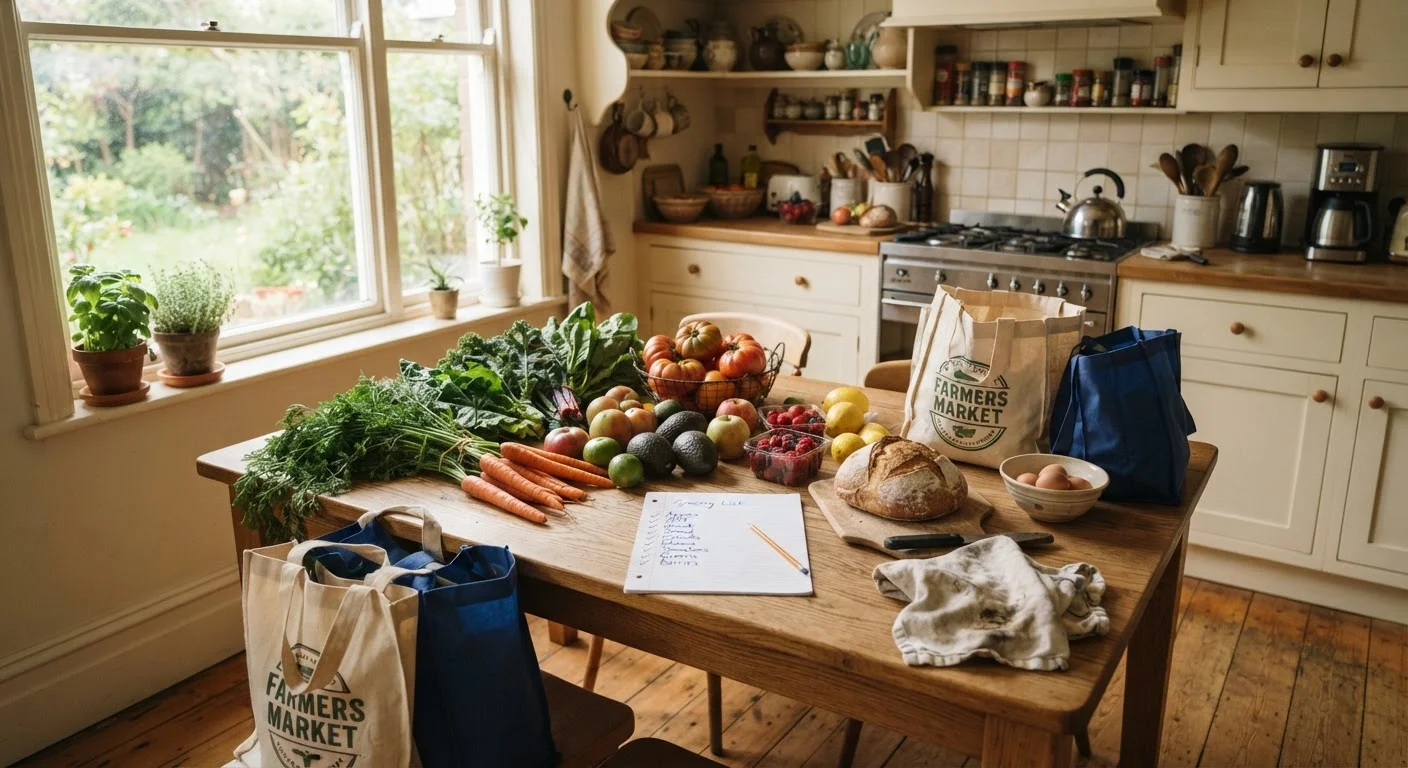
Why grocery spending drifts without a system
Groceries are one of the most variable line items in a household budget. Unlike rent or a car payment, the number changes every week based on what you buy, where you shop, and whether you had a plan before walking in. For many families, the total at the register is genuinely surprising, month after month.
That variability is not random. It follows a pattern: no list leads to duplicate purchases; shopping hungry leads to extras; skipping a weekly review means you never notice that the number keeps climbing. If your household budget is still taking shape, building one from the ground up helps you assign a realistic target to groceries before trying to control it.
The habits below work because they replace guesswork with structure. None of them require extreme couponing, a bulk warehouse membership, or a rigid diet plan.
Making meal planning work in real life
Meal planning has a reputation for being time-consuming, but the version that actually helps families is simple: decide five or six dinners before the week starts, write a list based on those meals, and buy only what is on the list. That is it.
The payoff is immediate. When you know what you are cooking, you buy ingredients with a purpose, and almost nothing gets thrown away unused. Food waste is a significant cost drain for most households. The U.S. Department of Agriculture has estimated that American consumers waste roughly 30 percent of the food supply at the retail and consumer level, which translates directly into grocery dollars spent on food that never gets eaten.
Batch cooking on a weekend afternoon extends the benefit further. Grains, proteins, and roasted vegetables cooked in bulk serve multiple meals across the week, which reduces the temptation to order takeout when a weeknight gets busy.
Keep a running list between shopping trips
A shared note on a family member's phone, or a paper on the fridge, captures items as they run out rather than relying on memory before a shopping trip. This prevents both the duplicate purchase and the forgotten item that sends you back to the store mid-week. Most mid-week store runs add $20 to $40 in unplanned items on average. A running list is one of the cheapest habits a household can build.
Store habits that limit unplanned spending
Grocery stores position high-margin items at eye level, place impulse buys near checkout, and route shoppers past categories they may not have come for. This is standard retail design, not a secret, and knowing it gives you a practical advantage.
Shopping with a written or phone-based list and sticking to it is the most direct counter. A few other habits reinforce that discipline:
- Shop after eating, not before. Hunger measurably increases the number of items placed in a cart.
- Compare unit prices, not package prices. A larger container is not always cheaper per ounce or per use.
- Check the top and bottom shelves. Store-brand and lower-margin items are often placed away from eye level.
- Avoid shopping for "the week" without a specific meal plan. Open-ended trips produce open-ended spending.
Tracking spending by category also matters. If you use a budgeting system, groceries should have its own line, separate from household supplies and personal care items, so the number reflects food costs accurately. Comparing envelope budgeting with digital apps can help you decide which tracking method fits your household's habits.
Buying in bulk without wasting money
Bulk buying lowers per-unit cost only when the item gets fully used before it expires or goes stale. For non-perishables, that math almost always works: dried beans, rice, pasta, cooking oil, canned goods, and cleaning supplies all store well and get used reliably.
For perishables, bulk buying works only when paired with a plan. Buying a large pack of chicken thighs makes sense if you cook two meals from it that week and freeze the rest the same day. Without that step, the savings disappear along with the food.
Families who spend time comparing per-unit costs across package sizes often find that mid-size packages from store brands match or beat bulk-size prices from name brands. The comparison takes thirty seconds and sometimes saves several dollars on a single item.
Consistent habits in the store and kitchen tend to compound over time. Families who also look at recurring charges elsewhere, such as subscriptions, often find that subscription creep follows the same pattern as grocery drift: small, unnoticed increases that add up across months.
This article is for general informational purposes only and does not constitute financial or dietary advice. Consult a qualified financial professional for guidance tailored to your household's circumstances.
The content provided on our blog site traverses numerous categories, offering readers valuable and practical information. Readers can use the editorial team’s research and data to gain more insights into their topics of interest. However, they are requested not to treat the articles as conclusive. The website team cannot be held responsible for differences in data or inaccuracies found across other platforms. Please also note that the site might also miss out on various schemes and offers available that the readers may find more beneficial than the ones we cover.