

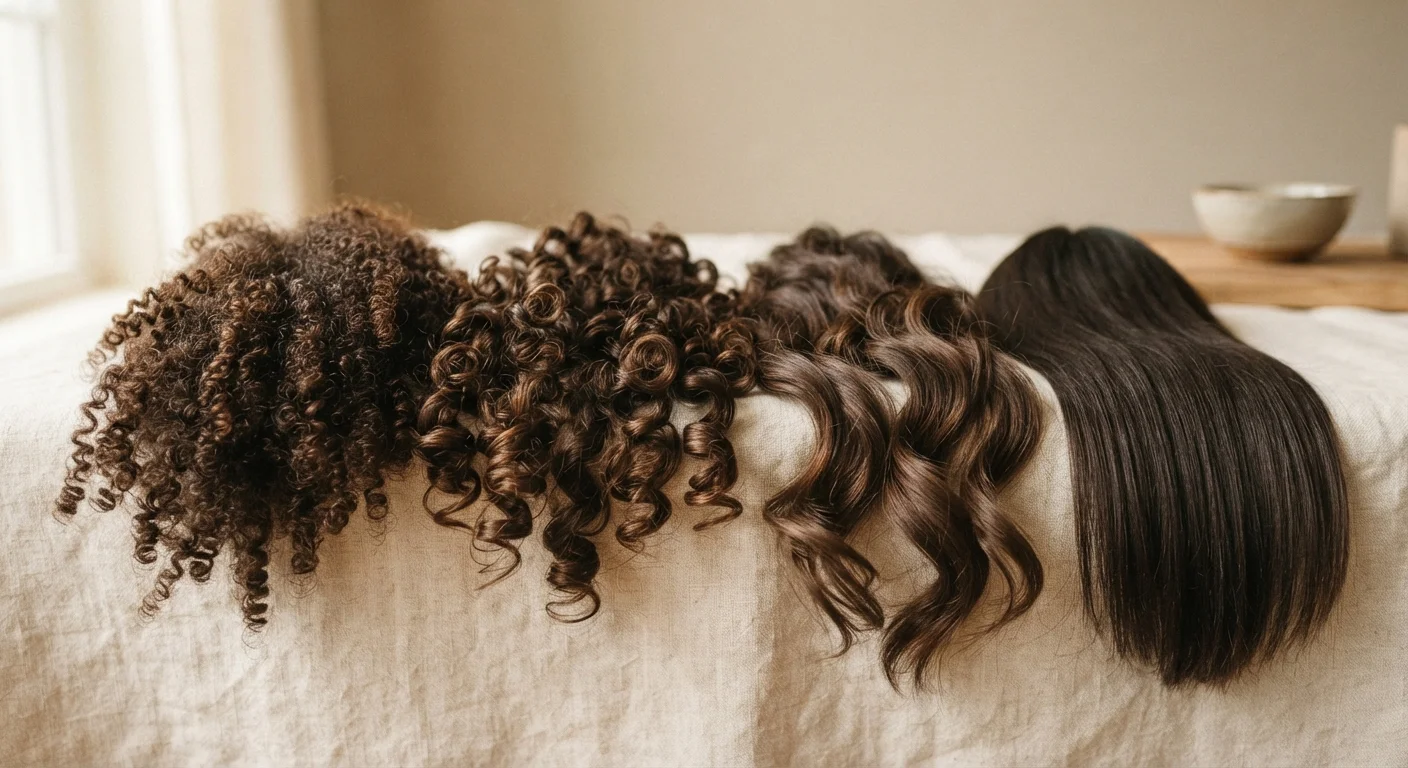
The three porosity levels and what they mean
Hair porosity falls into three broad categories: low, medium (sometimes called normal), and high. Each one behaves differently when it comes into contact with water and product.
Low porosity hair has cuticle scales that lie flat and tightly packed together. Water beads up on the strand and takes a long time to absorb. Products tend to sit on the surface rather than penetrating the shaft, which means buildup is a frequent complaint.
Medium porosity hair has cuticle scales that are slightly raised. Moisture enters and exits at a balanced rate, and most products work reasonably well without much adjustment.
High porosity hair has gaps or raised scales along the cuticle. Moisture gets in fast, but it also escapes fast, which can result in frizz, dryness, and hair that feels rough or brittle. High porosity is often caused by chemical processing, heat damage, or prolonged sun exposure, though some people have naturally elevated porosity.
Start with a clean strand for accurate testing
Product buildup can interfere with both the float test and the slip-and-slide test. Use a strand that has been washed with a clarifying or sulfate-based shampoo and allowed to air-dry without any styling products. A clean strand gives you a much more reliable baseline reading.
Why porosity shapes your entire product routine
Knowing your porosity level helps explain why a product that works brilliantly for a friend does nothing for you. A heavy cream designed for high porosity hair can coat low porosity strands and block moisture entirely. A lightweight spray formulated for low porosity hair may evaporate right off high porosity strands before providing any real benefit.
For low porosity hair, gentle warmth during conditioning helps the cuticle open slightly and accept moisture. Covering hair with a plastic cap after applying a deep conditioner, or sitting in a warm shower, can make a real difference. Lightweight, water-based products generally absorb better than thick creams and oils on this hair type.
For high porosity hair, the goal is sealing moisture in after it has been absorbed. Layering a butter or oil over a water-based moisturizer helps close those gaps in the cuticle temporarily. Protein treatments can also help fill in weak spots in the shaft, though they need to be balanced with moisture to avoid brittleness. Check out which kitchen ingredients genuinely help before reaching for pantry staples on high porosity strands.
40%+
of hair's tensile strength lost after bleaching
Research published in the Journal of Cosmetic Science has documented significant structural changes to the hair shaft following repeated chemical lightening, which directly elevates porosity.
450°F
temperature at which keratin bonds begin to break
Hair science literature notes that sustained heat above this threshold disrupts the protein structure of the strand, raising cuticle damage and increasing porosity over time.
How to test your porosity without spending anything
The float test described in the FAQ below is accessible and free. Another quick method is the slip-and-slide test: run two fingers up a single strand from tip to root. Smoothness with little resistance suggests low porosity. A rough, uneven feel suggests high porosity. Medium porosity usually feels somewhere in between.
Neither test is scientifically precise. Hair condition on any given day, product residue, and strand location on your head can all affect the result. Use the tests as a general guide, then adjust your routine based on how your hair actually responds to different products and methods.
Just as certain beauty myths lead to wasted spending in skincare, porosity misconceptions lead to shelves full of products that never quite work. Misinformation in beauty routines costs real money, and hair care is no exception. Identifying your porosity level is one of the faster ways to stop buying products at random.
How porosity can change over time
Porosity is partly genetic, but it is not fixed forever. Repeated heat styling, bleaching, relaxing, and even excessive brushing raise porosity by lifting or damaging the cuticle. UV exposure from prolonged time in the sun has a similar effect on the outer layer of the strand.
On the other hand, consistent protective practices can slow further damage. Reducing heat frequency, using a heat protectant before any hot tool, and incorporating regular deep conditioning sessions all help maintain the cuticle over time. There is no product or treatment that will permanently restore a damaged cuticle to its original state, but consistent care does support the health of new growth as it comes in.
This article is for general informational purposes only and is not a substitute for professional advice from a licensed cosmetologist or trichologist.
Frequently Asked Questions
The most common DIY method is the float test: drop a clean, product-free strand into a glass of room-temperature water. If it sinks quickly, your hair is likely high porosity. If it floats and slowly sinks, it is probably medium porosity. If it stays on the surface for a long time, it is likely low porosity. This test is a rough guide, not a lab measurement, so treat the result as a starting point.
You cannot permanently change your baseline porosity, which is partly genetic. However, chemical treatments, heat styling, and UV exposure can increase porosity over time. Protective practices like limiting heat use and deep conditioning can reduce further damage to the cuticle.
Yes. High porosity hair absorbs color pigment quickly but loses it faster because the cuticle does not hold pigment in. Low porosity hair takes longer to process because the cuticle resists penetration. This is why colorists often adjust processing time or formulas based on hair condition.
Curly and coily hair can naturally have more variation in cuticle structure, which may lean toward higher porosity. However, porosity is not dictated by texture alone. Damage from heat or chemicals is a bigger driver of high porosity across all hair types.
Lightweight humectants like aloe vera and glycerin tend to absorb well without sitting on top of the strand. Heavy butters and oils can build up quickly on low porosity hair, so using them sparingly or with gentle heat helps the cuticle accept moisture more readily.
Porosity describes how the individual strand absorbs moisture. Density refers to how many strands you have on your scalp. They are separate properties, and each affects product choice differently. Someone can have low density but high porosity hair, for example.
The content provided on our blog site traverses numerous categories, offering readers valuable and practical information. Readers can use the editorial team’s research and data to gain more insights into their topics of interest. However, they are requested not to treat the articles as conclusive. The website team cannot be held responsible for differences in data or inaccuracies found across other platforms. Please also note that the site might also miss out on various schemes and offers available that the readers may find more beneficial than the ones we cover.