

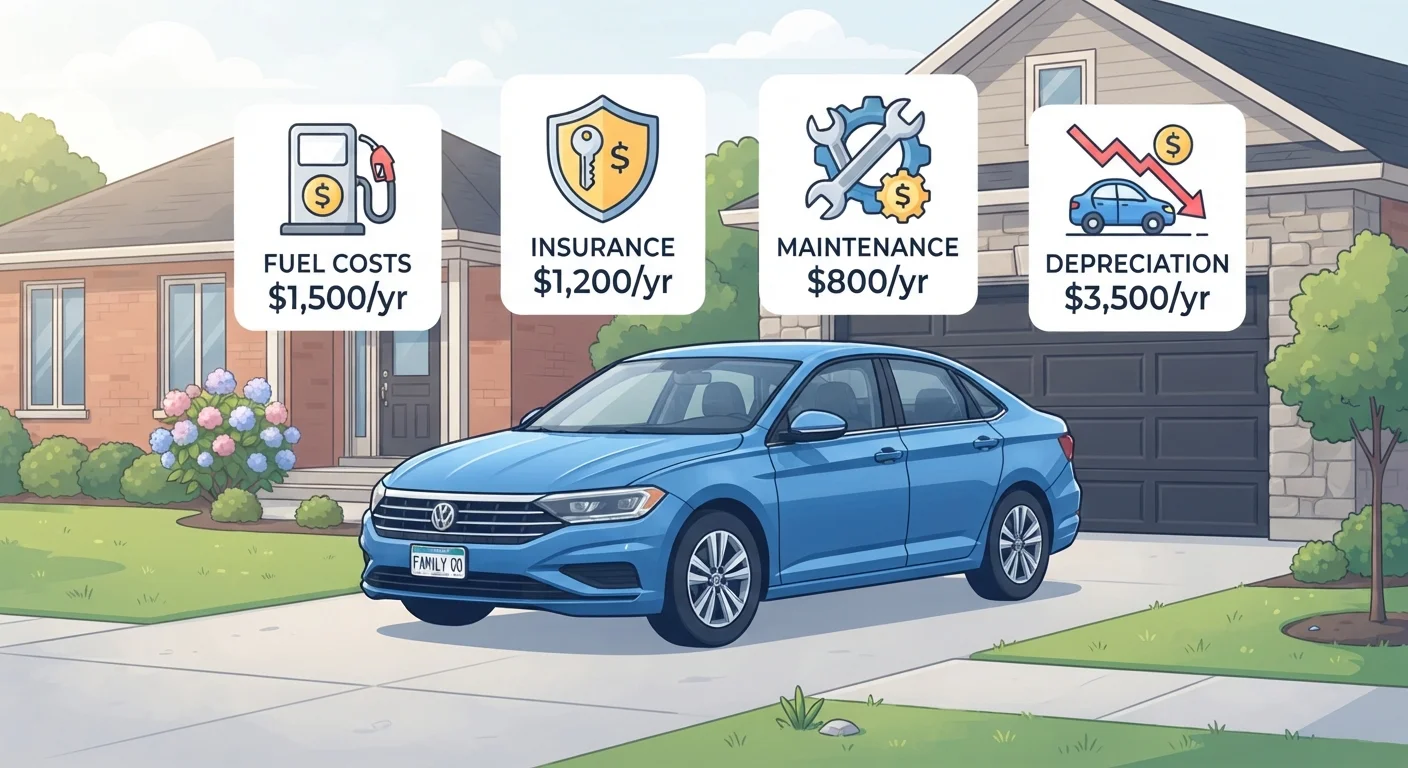
Why the sticker price is only part of the story
Walk onto any lot and the price on the windshield is the number that gets attention. But that figure covers only the moment of purchase. From the day you register the vehicle, a set of recurring costs begins: insurance premiums, fuel, loan interest if you financed, and routine maintenance. Each of these is predictable in general terms, yet buyers rarely add them up before deciding what they can afford.
The gap between purchase price and total ownership cost is where many family budgets get strained. A vehicle that fits the monthly payment may not fit the full monthly expense once fuel, insurance, and upkeep are included. The financial trade-offs between new and used vehicles show how this gap differs depending on what you buy.
Depreciation: the cost you never see as a bill
Depreciation is the decline in a vehicle's market value over time. It does not arrive as an invoice, but it is real money lost. A new car that loses a significant portion of its value in the first few years means that if you sell or trade it, you recover far less than you paid. The gap between what you paid and what you get back is a direct cost of ownership.
Used vehicles depreciate more slowly because the steepest drop has already happened. That is one reason a used vehicle can be a sound financial choice for families watching total costs, not just monthly payments.
$12,000+
Estimated average annual cost to own a new vehicle
AAA's annual 'Your Driving Costs' study has consistently found total ownership costs for a new average sedan exceeding this figure when all expenses are combined.
40-50%
Value a new car can lose in its first three years
Industry data from automotive valuation sources indicates new vehicles commonly depreciate by this range within three years, with the sharpest drop in year one.
~15%
Share of ownership cost attributed to fuel (average driver)
Fuel typically accounts for roughly 15 percent of total ownership costs for an average driver, though this rises significantly for higher-consumption vehicles or heavy commuters.
Insurance, registration, and financing costs
Insurance is a legal requirement in almost every state, and the premium is determined by factors including the vehicle's value, your driving record, location, and coverage level. Higher-value vehicles generally carry higher premiums. Registration fees and state taxes are paid annually or at transfer and vary by jurisdiction.
If you financed the purchase, interest adds a meaningful amount to the vehicle's total cost. The interest rate (APR) and loan term together determine how much extra you pay over the life of the loan. Understanding auto financing terms before signing a loan agreement can prevent costly surprises.
Fuel and maintenance: the ongoing operating costs
Fuel cost depends on how many miles you drive, the vehicle's fuel economy rating, and local gas prices. Driving habits matter too: frequent short trips, highway versus city driving, and load weight all affect real-world fuel consumption. Several common beliefs about fuel efficiency do not hold up against actual data.
Routine maintenance, including oil changes, tire rotations, brake inspections, and filter replacements, follows a schedule set by the manufacturer. These costs are predictable and modest when kept up. Skipping them tends to produce larger repair bills later, particularly with brakes, tires, and cooling systems.
Add up all five cost categories before deciding
Before committing to any vehicle, estimate the annual cost of depreciation, insurance, fuel, financing, and maintenance together. Many buyers find this total changes which option actually fits their budget. Free ownership cost calculators are available through consumer and automotive research organizations.
This article is for general informational purposes only and does not constitute personalized financial advice. Consult a qualified financial professional regarding decisions specific to your situation.
Frequently Asked Questions
Depreciation is consistently the largest cost component. A new vehicle can lose a substantial portion of its value within the first few years, regardless of how well it is maintained. This loss is real even if you never see it as a direct bill.
Estimates vary by source, vehicle type, and location, but total annual ownership costs for an average new vehicle commonly exceed $10,000 when all expenses are counted. Used vehicles generally cost less to own per year, though insurance and financing terms differ.
Not necessarily. A vehicle with better fuel economy may carry a higher purchase price, which affects depreciation and financing costs. Total ownership cost depends on how many miles you drive and how long you keep the vehicle. <a href="/automotive/fuel-economy-myths-debunked">Common fuel economy assumptions</a> are worth checking before you decide.
Leasing changes which costs you absorb. You avoid large depreciation losses on the vehicle's value but pay for the depreciation that occurs during your lease term. <a href="/automotive/car-leasing-vs-buying-explained">Leasing versus buying</a> each have distinct financial structures worth understanding before committing.
A car purchase is one of the larger financial decisions most families make. If you are uncertain how a purchase or loan fits your broader budget, speaking with a financial adviser before signing is reasonable. This article provides general information, not personalized financial advice.
The content provided on our blog site traverses numerous categories, offering readers valuable and practical information. Readers can use the editorial team’s research and data to gain more insights into their topics of interest. However, they are requested not to treat the articles as conclusive. The website team cannot be held responsible for differences in data or inaccuracies found across other platforms. Please also note that the site might also miss out on various schemes and offers available that the readers may find more beneficial than the ones we cover.