

Why the flight itself deserves its own plan
Families spend weeks planning hotels and itineraries, then board a ten-hour flight with nothing but a half-charged tablet and hope. That gap is where long-haul travel goes sideways. Kids have shorter attention spans than adults, lower tolerance for discomfort, and no real concept of why the flight takes this long. A little preparation closes that gap without adding much cost to the trip.
The strategies below are ones that traveling parents use on real long-haul routes. They work across a wide age range, and most of them cost little or nothing. If you are already looking at ways to cut trip costs overall, our guide on packing light with kids pairs well with this article, since carry-on-only travel and smart in-flight planning often go hand in hand.
Build a surprise activity bag before you leave home
A small drawstring bag or ziplock pouch filled with wrapped mini-activities works surprisingly well because the unwrapping itself is the entertainment. Items can include a new small notebook, a single pack of stickers, a tiny puzzle, a deck of cards, or a travel-size game. Wrapping each item in tissue paper or a piece of newspaper adds several minutes of anticipation before the child even starts using it.
The budget for this can be very low. Dollar stores and discount bins often carry suitable items. Space them out across the flight rather than handing everything over at once; a staggered release keeps novelty alive for the full duration.
Wrapping each item adds minutes of anticipation before the child even starts using it.
Use timed activity segments instead of open-ended screen time
Handing over a tablet at takeoff and retrieving it at landing often results in a meltdown when the battery dies or the child hits a content wall midway through. A structured rotation works better: thirty minutes of drawing, then a snack, then one episode of something downloaded, then a card game with a parent, then quiet reading time.
The rotation gives children something to look forward to rather than the creeping dread of "how much longer." It also means screens feel like a reward within the rotation rather than a crutch, which typically extends how long they actually hold a child's attention.
A structured rotation means screens feel like a reward rather than a crutch.
Pack your own snacks from home
Airport food is expensive, and airline snack carts often carry items children will refuse. Familiar food from home solves both problems. Crackers, dried fruit, cheese sticks, small sandwiches, and granola bars travel well in a carry-on and cost a fraction of what the same items run at a terminal kiosk.
Snacks also double as pacing tools. A small snack at the two-hour mark and again at the four-hour mark gives children a concrete reward to work toward. Check airline rules for any restrictions on bringing food across international borders, and verify those rules with the airline and relevant customs authority before you travel, since policies vary by route.
Familiar food from home costs a fraction of terminal prices and gives kids comfort mid-flight.
Bring low-tech games that work in a seat
Many classics require almost no space and no power. A standard deck of cards supports dozens of games for children as young as four. Magnetic travel boards for chess or checkers are compact and reusable across many trips. "I Spy," the license plate game adapted for aircraft liveries visible from the window, and storytelling games where each person adds one sentence all cost nothing beyond the time to introduce them.
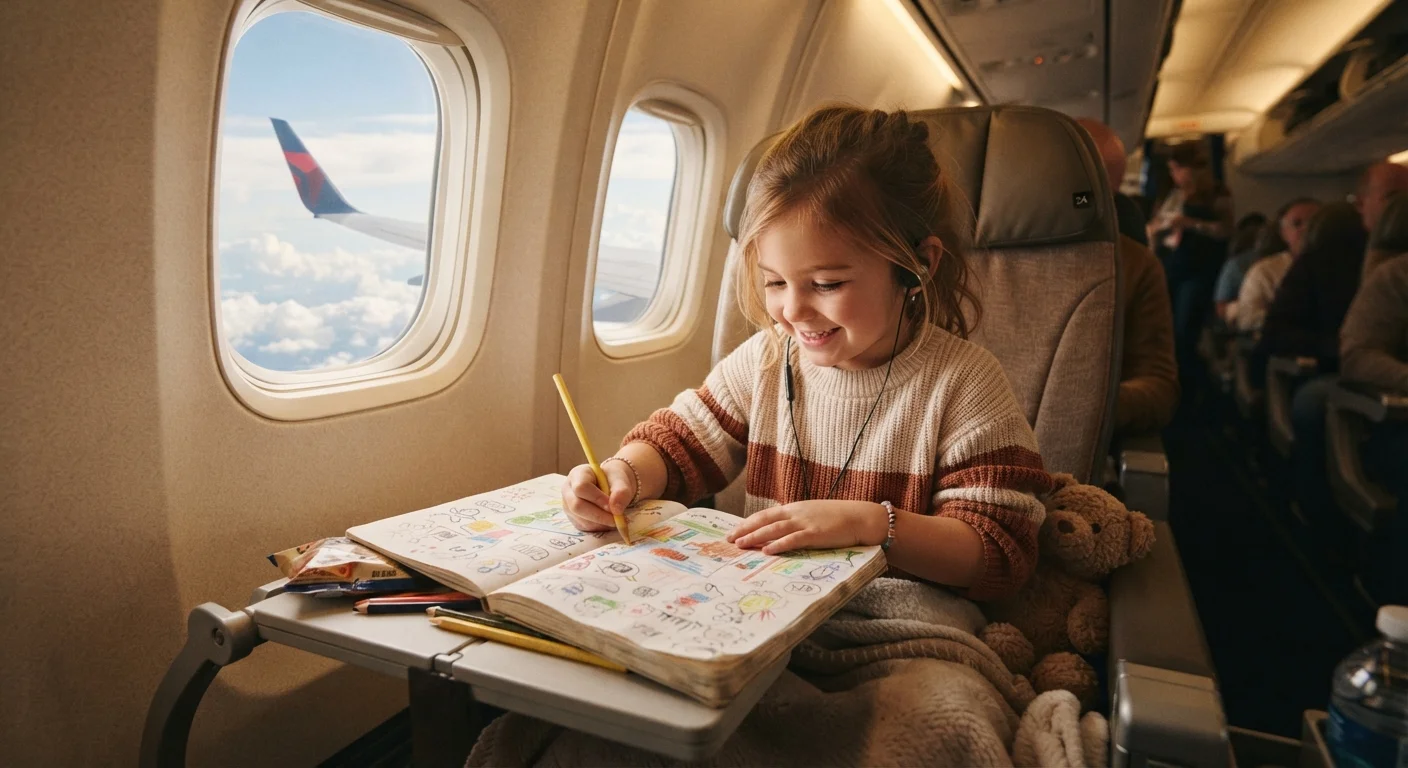
Older children often respond well to travel journals where they write or draw observations about the flight itself: what the clouds look like, what they ate, what they are most excited to do at the destination. This doubles as a keepsake and keeps them occupied for longer than most parents expect.
A standard deck of cards supports dozens of games for children as young as four.
Prepare kids for the physical reality of flying
Ear pressure, recycled air, and disrupted sleep schedules catch children off guard when no one prepares them. Swallowing, yawning, or chewing gum (for children old enough) during ascent and descent helps with ear discomfort. Bring a familiar small blanket or travel pillow if the child uses one at home, since familiar comfort objects help with sleep onset on overnight flights.
Dehydration is common on long flights because cabin humidity runs low. Bringing a refillable water bottle and filling it after security is cheaper than buying water airside and keeps children better hydrated across a long journey. A hydrated, physically comfortable child is meaningfully easier to manage than one who is not.
Cabin humidity runs low, so a refillable water bottle is cheaper and more practical than buying water airside.
Align seat selection with your child's needs
Bulkhead rows give toddlers floor space during level flight and make it easier for adults to stand without disturbing neighbours. Aisle seats let older children take bathroom trips without climbing over strangers, which reduces the anxiety and embarrassment that can trigger meltdowns. Window seats work well for kids fascinated by clouds and landscapes, and that visual interest can hold attention for a surprisingly long time during daytime flights.
Seat selection fees vary widely by airline, and the best available seat at check-in is often free or lower cost than selecting during booking. Check your airline's policy, and consider whether travel reward points you may have accumulated could offset any seat selection costs.
The best available seat at check-in is often free or lower cost than selecting during booking.
Setting the trip up for success
Preparation the night before matters as much as what you pack. Walk children through what to expect: how long the flight is, when meals come, when it will get dark in the cabin. Kids who understand the structure of a flight tend to handle boredom and discomfort more calmly than those who are surprised by it. You can tie this into broader money and life lessons, too; the age-by-age money guide touches on how planning and patience are skills worth building early.
Once you land, the savings you protected during the flight can go toward the parts of the trip that matter most. See how other families reduce accommodation costs in our piece on why families overpay for hotels, and check the comparison between vacation rentals and hotels for families if you are still deciding where to stay.
Time your flights around sleep schedules
Overnight or late-evening departures that align with a child's natural sleep window cut the number of waking hours you need to fill. Many families find that a well-timed departure eliminates the need for half the activities they packed. If your schedule allows it, this is one of the most effective and free adjustments you can make. Shoulder season travel often opens up more flight timing options too; our article on shoulder season travel explains how to find those windows.
The content provided on our blog site traverses numerous categories, offering readers valuable and practical information. Readers can use the editorial team’s research and data to gain more insights into their topics of interest. However, they are requested not to treat the articles as conclusive. The website team cannot be held responsible for differences in data or inaccuracies found across other platforms. Please also note that the site might also miss out on various schemes and offers available that the readers may find more beneficial than the ones we cover.