

Why camping deserves a real look as a family vacation
Camping sits at the lower end of the family vacation cost spectrum, but it is not automatically cheap. Site fees, gear, food, and fuel all add up. The families who come out well ahead financially are the ones who plan deliberately rather than assuming tents and coolers equal savings by default.
Compared with hotel stays, camping eliminates nightly room charges and, when you cook at the site, cuts restaurant spending significantly. For a family of four, that combination can translate to meaningful savings over a four- or five-night trip. If you want to see how that stacks up against other lodging types, the vacation rental vs. hotel comparison lays out a useful framework for thinking through real costs.
Before the logistics below make sense, it helps to gather what you will need.
What you will need
What to do before you book anything
The single biggest mistake first-time camping families make is treating site reservations as an afterthought. National park campgrounds and popular state park sites at many destinations fill up months ahead, particularly for summer weekends. Recreation.gov handles federal sites; most states run their own reservation portals.
Timing your trip outside peak summer weeks can open up more availability and lower fees. The shoulder season guide for families covers how to identify those windows for specific destinations, including which weeks tend to offer good weather without the crowds.
Once you have a destination and rough dates, check three things before committing: the campsite's amenities (flush toilets vs. pit toilets, electrical hookups, water access), the cancellation policy, and any permit requirements for the surrounding trails or activities you plan.
Search and reserve your campsite early
Identify two or three campgrounds that fit your destination and check their reservation windows. Many open bookings four to six months out. Log in or create an account on the relevant portal, filter by the amenities your family needs (hookups, restrooms, pet-friendly), and book as soon as your dates are confirmed.
Review site rules and required permits
After booking, read the campground's full regulations page. Note rules on campfire building, quiet hours, food storage, and whether day-use areas require separate permits. If you plan to hike, check whether trailhead permits are needed and whether those are also reservation-based.
Build your gear list around what you actually own
Write down the essential categories: shelter, sleep, cooking, lighting, hygiene, and first aid. Go through each and note what you already have that meets the need. For gaps, decide whether to borrow, rent, or buy based on how likely you are to camp again within the next year.
Plan meals and pack food accordingly
Write out every meal and snack for the trip before packing. Campsite cooking is slower than a home kitchen, so simpler meals work better in practice. Prep as much as possible at home: pre-chopped vegetables, pre-marinated proteins, and dry ingredient mixes all reduce on-site effort. Store everything according to the campground's rules.
Check the weather forecast and make a contingency plan
Two or three days before departure, check overnight lows and any severe weather potential. Identify where your group would shelter during a storm if your tent site has no permanent structures. Pack an extra waterproof layer for each family member regardless of the forecast.
Do a dry run setup at home before you leave
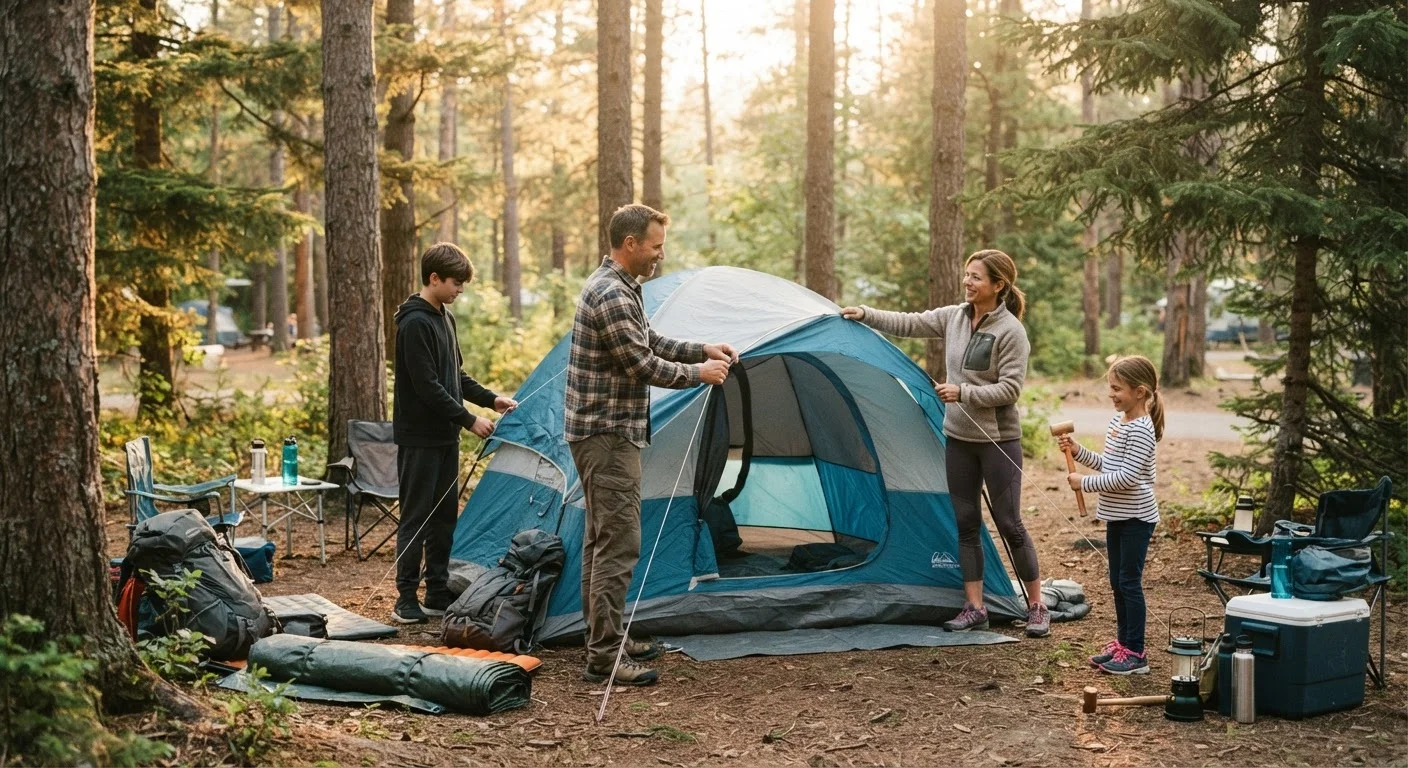
Set up your tent in the backyard or a garage at least once before the trip. Confirm every pole, stake, and rain fly is present and that each adult in the group knows how assembly works. A 10-minute test run at home prevents a two-hour struggle in the dark at the campsite.
Gear: what you actually need versus what you can skip
Camping gear lists on the internet tend toward excess. A family's first trip does not require a full outfitting. The core items are shelter (a tent sized correctly for your group, with a footprint or ground cloth), sleep systems (sleeping bags rated for the expected overnight lows), and a way to cook and store food safely.
Renting gear from an outdoor retailer or borrowing from friends before purchasing is worth considering seriously. One camping trip is enough to reveal what your family actually uses and what stays packed. Buying after that first trip means spending on things you know you will reach for again.
Packing discipline also matters. Families who bring too much have a harder time staying organized at the site. The one-bag family travel discussion addresses that tradeoff in a different context, but the core logic applies: every extra item has a cost in space, weight, and setup time.
Tent (correctly sized)
Shelter for the whole group; size up by one person from your actual headcount for comfortable sleeping.
Sleeping bags and sleeping pads
Insulation and cushioning for overnight sleep; pads also provide critical ground insulation.
Camp stove and fuel canister
Reliable cooking heat independent of campfire conditions or fire bans.
Hard-sided cooler or bear canister
Food storage that meets campground wildlife safety requirements.
Headlamps (one per person)
Hands-free lighting for night trips to restrooms and around the site.
Basic first aid kit
Treatment for common outdoor injuries including blisters, cuts, and insect stings.
Tarp or extra rain fly
Additional weather protection over the cooking and dining area.
Camp chairs and small table
Comfortable seating for meals and downtime at the site.
Safety and logistics that families often underestimate
Weather is the variable that undoes the most camping trips. Check forecasts for overnight lows, not just daytime highs, and know the campground's policy on severe weather. Many sites have no shelter structures, so a plan for where to go during a thunderstorm should be made before one rolls in.
Food storage rules exist at most campgrounds for genuine wildlife safety reasons, not bureaucratic ones. Bear boxes, hard-sided coolers locked in your vehicle, or bear canisters are required at many sites. Read the specific rules for your campsite before you arrive, not when the ranger knocks on your door.
A basic first aid kit sized for backcountry use (not just a box of bandages) and a printed copy of the campground's address and emergency contact number round out the safety basics. Cell service is unreliable at many sites, so do not count on searching for information once you are there.
Travel conditions, campsite availability, and local regulations change. Always verify current rules and entry requirements directly with the campground or managing agency before your trip.The content provided on our blog site traverses numerous categories, offering readers valuable and practical information. Readers can use the editorial team’s research and data to gain more insights into their topics of interest. However, they are requested not to treat the articles as conclusive. The website team cannot be held responsible for differences in data or inaccuracies found across other platforms. Please also note that the site might also miss out on various schemes and offers available that the readers may find more beneficial than the ones we cover.