

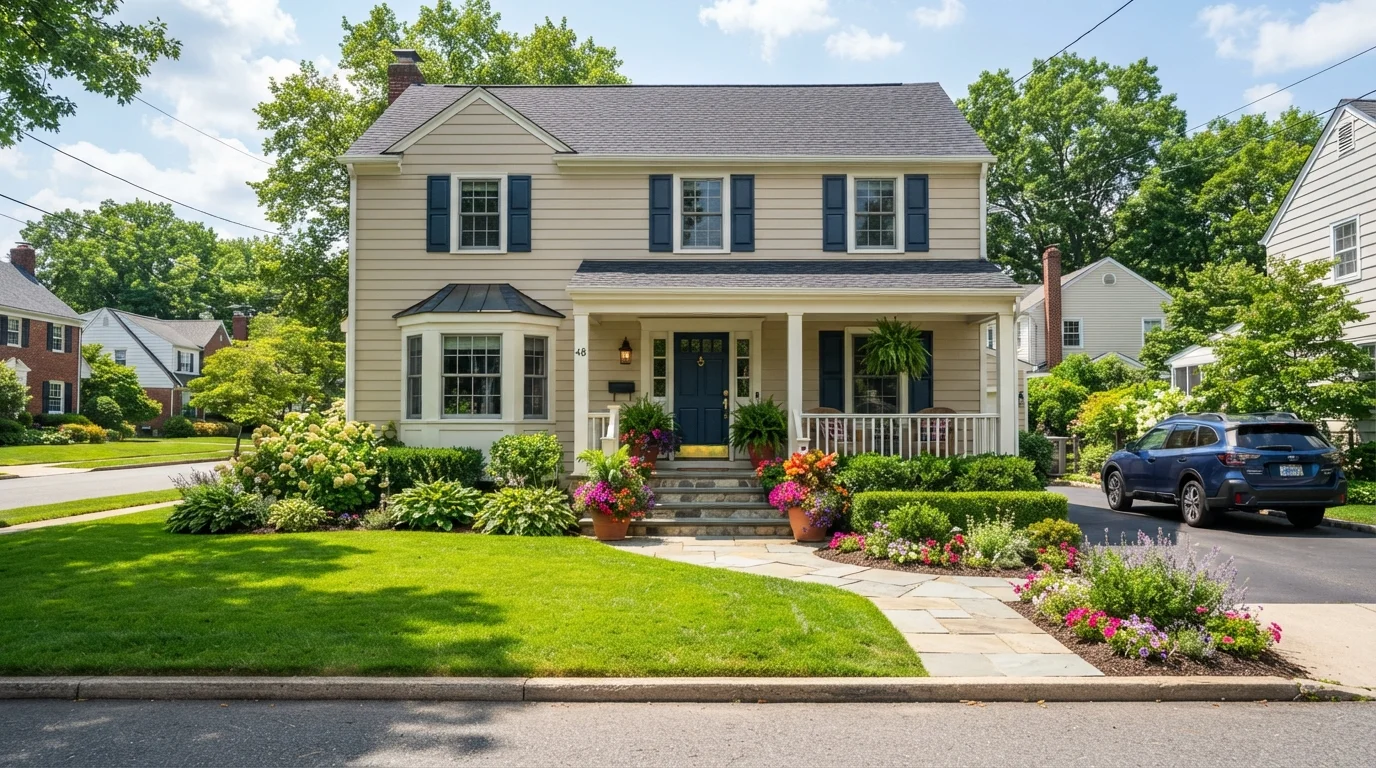
What curb appeal actually includes
The term gets used mainly in real estate listings, but curb appeal covers the entire exterior presentation of a home as seen from the street or front approach. That means the lawn and garden beds, the driveway or walkway condition, the siding or brick, the roof edge, gutters, windows, shutters, porch, front door, lighting, and any fencing or retaining walls in view.
It is not limited to decorative touches. A missing shutter, a cracked driveway, or a sagging gutter affects curb appeal just as much as an overgrown hedge. The impression a home makes from the outside reflects how the property has been maintained as a whole, and visitors, neighbors, and buyers all pick up on that signal whether or not they articulate it.
Curb appeal also includes cleanliness. A house with outdated paint but a clean walkway, tidy beds, and washed windows reads as cared for. A recently painted house with weeds pushing through the front path and a corroded mailbox does not.
Why it matters beyond selling a home
Most articles connect curb appeal to home resale, and the connection is real. Buyers form an impression within seconds of arriving, and a poor exterior can create doubt that affects how they evaluate everything inside. But curb appeal matters even if you have no plans to sell.
A maintained exterior has practical effects. Gutters that are cleaned and properly sloped protect the foundation. Cracks in walkways filled promptly prevent tripping hazards and water intrusion. A front door that seals correctly reduces drafts and energy loss. Many of the tasks that improve curb appeal also prevent more expensive repairs down the line.
There is also the neighborhood dimension. Block-by-block, home exteriors affect each other's perceived value. A well-maintained property can positively influence how the surrounding street reads to outsiders, and vice versa. This is not about keeping up appearances for social reasons; it is a practical reality of how residential property values are assessed.
Start with cleaning before spending
Before buying plants, paint, or fixtures, walk your exterior with fresh eyes and clean what is already there. Pressure wash the driveway, scrub the front steps, wipe down the mailbox, and clear debris from beds. In many cases, a clean exterior looks dramatically better than one covered in grime and fallen leaves, at zero material cost.
Where low-cost improvements have the most impact
Not all exterior upgrades deliver equal results per dollar spent. The areas with the most visible return for the least outlay are generally the front entry, the lawn edges, and the planting beds.
The front door is the focal point of any exterior. Repainting it in a color that contrasts cleanly with the siding costs the price of a quart of exterior paint and an afternoon. New house numbers and a simple door handle set cost less than most people assume and noticeably sharpen the look of the entry.
Lawn edges matter more than lawn perfection. A neatly edged lawn with defined borders between grass and beds reads as intentional and maintained, even if the grass itself is not lush. Edging is a task that requires only a basic tool and consistent effort a few times per season.
Mulch in garden beds is one of the highest-impact low-cost changes available. Fresh mulch covers bare soil, suppresses weeds, and gives beds a finished appearance that draws attention away from plants that may not be thriving. A few bags of mulch can transform an unkempt bed in under an hour.
For readers working with limited budgets, prioritizing repairs before cosmetics is worth understanding before committing spending to purely visual upgrades.
What curb appeal does not fix on its own
Curb appeal improvements address what is visible. They do not substitute for underlying maintenance. A coat of paint over rotting trim conceals the problem briefly and makes it worse by trapping moisture. Lush landscaping in front of a foundation with drainage issues does not protect the structure.
If a home has genuine deferred maintenance, such as roof damage, cracked foundations, failing gutters, or deteriorating siding, those issues should be addressed before or alongside cosmetic improvements. Some of this work requires permits or licensed contractors depending on local building codes; always verify requirements with your local authority before starting exterior structural work.
Curb appeal also has limits when a home's exterior style is significantly out of step with the neighborhood. Cosmetic improvements work best when they refine what is already there rather than compensate for structural or architectural mismatches.
Frequently Asked Questions
It can, though the size of the effect depends on the local market and the condition of comparable homes nearby. A well-maintained exterior signals to buyers that the rest of the home has been looked after. Neglect on the outside often leads buyers to assume problems inside, which can reduce offers or extend time on market.
Cleaning costs very little and makes a big difference. Pressure washing driveways and siding, weeding garden beds, removing dead plants, and washing windows are all low- or no-cost tasks. A fresh coat of paint on the front door is one of the highest-return small investments for exterior appearance.
Maintenance covers both visible and hidden systems, such as roofing, gutters, HVAC, and plumbing. Curb appeal specifically refers to what is visible from the street. However, the two overlap: a sagging gutter or peeling paint affects curb appeal and also signals deferred maintenance.
Most basic curb appeal work is DIY-friendly: mowing, edging, weeding, adding mulch, and planting simple annuals or perennials. A landscaper is worth considering for larger projects like grading, tree removal, or installing irrigation, where safety or permits may be involved.
Some exterior improvements, particularly roof replacement or updated drainage, can influence insurance premiums. Check directly with your insurer about which specific upgrades may qualify for a review. General cosmetic improvements like landscaping typically do not affect premium calculations.
The content provided on our blog site traverses numerous categories, offering readers valuable and practical information. Readers can use the editorial team’s research and data to gain more insights into their topics of interest. However, they are requested not to treat the articles as conclusive. The website team cannot be held responsible for differences in data or inaccuracies found across other platforms. Please also note that the site might also miss out on various schemes and offers available that the readers may find more beneficial than the ones we cover.